Small and medium-sized businesses (SMBs) are constantly seeking ways to stay competitive and reliable, becoming more powerful and flexible. But with traditional phone systems, SMBs often face high costs, limited scalability, and a lack of flexibility to adapt to changing business needs.
This is why more SMBs are making the switch to VoIP (Voice over Internet Protocol) technology.
By using an internet connection for calls, VoIP is transforming business communication, making it more flexible, cost-effective, and productive.
In this blog, we will explore how VoIP technology can transform your SMB, the benefits of using VoIP, and how you can implement VoIP in your business.
PBX vs. VoIP technology
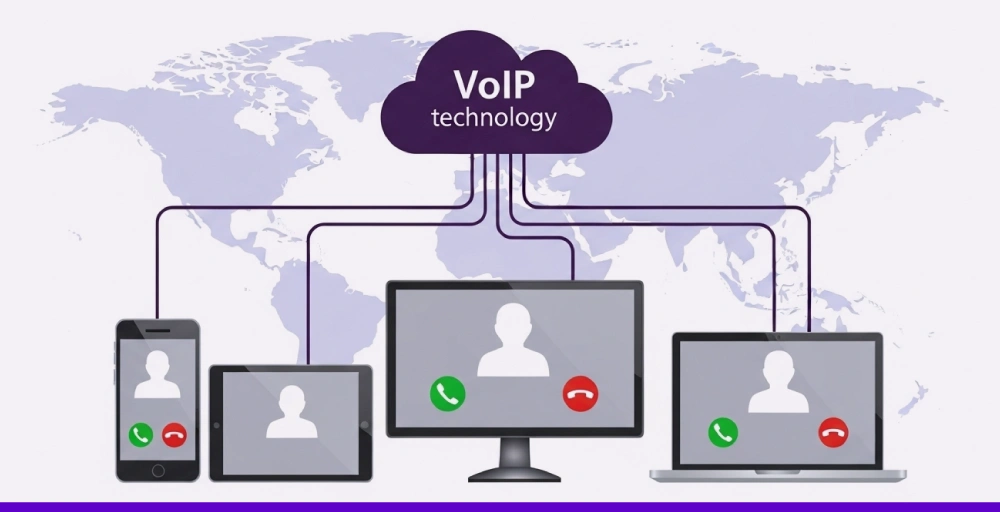
When choosing a business phone system for SMBs, there are two main options: PBX (Private Branch Exchange) and VoIP (Voice over Internet Protocol).
PBX uses physical phone lines and on-site hardware to manage business calls, while VoIP transmits voice data over the internet. Setting up a PBX system requires extensive work, a complex network of wires, and a high upfront cost.
However, with VoIP technology, the process is cost-effective and straightforward. Similarly, if you’re in a hardware-focused industry, RapidDirect’s CNC machining services can streamline manufacturing by providing fast, precise, and scalable production capabilities.
For a VoIP business phone system, you just require computers, microphones (if not built-in), and a reliable internet connection.
In addition, traditional PBX systems cannot integrate with CRMs and business applications. In contrast, VoIP seamlessly connects with the other tools.
Why SMBs are moving away from traditional PBX?
Nowadays, SMBs are increasingly switching from traditional PBX systems to cloud-based VoIP solutions.
Some of the major reasons behind moving to VoIP solutions for small businesses are:
1. Cost savings
For small businesses, budget is one of the primary concerns. A traditional PBX comes with high upfront costs due to the need for costly hardware, installation, and ongoing maintenance.
On the other hand, VoIP solutions offer a subscription-based pricing model, making them more affordable and predictable, leading to long-term savings for growing businesses.
2. Flexibility and mobility
With the rise of remote and hybrid work, businesses need communication tools that go beyond the confines of the office.Traditional PBXs lack mobility, as they rely on desk phones that are tied to specific offices.
In contrast, VoIP allows SMBs to make and receive calls from anywhere, using multiple devices such as softphones and laptops, which keep the team connected via an internet connection.
3. Advanced features
Modern cloud-based systems come with a range of advanced features that are either unavailable or costly on traditional PBX systems.
Functions like voicemail-to-email, auto-attendants, call forwarding, video conferencing, and CRM integrations help SMBs operate more efficiently and deliver a better customer experience.
4. Reliability and maintenance
Maintaining a PBX system often requires in-house IT expertise or the services of outside technicians, which can lead to additional costs and potential downtime if the hardware fails.
Cloud systems shift this responsibility to the provider, who ensures software updates, redundancy, and failover mechanisms are in place, leading to greater reliability and uptime.
5. Integration with modern tools
SMBs rely on productivity platforms such as Microsoft Teams, Slack, Salesforce, and HubSpot. Traditional PBX systems often struggle to integrate with these tools, which limits efficiency.
Cloud-based phone systems connect seamlessly with business applications, streamlining workflows and improving collaboration.
Key benefits of VoIP for SMBs
VoIP offers several benefits, like cost savings, scalability, and flexibility. It also reduces international calling expenses and removes the burden of hardware maintenance.
Here are some benefits of using VoIP for small businesses to enhance their productivity:
- Empower remote work: With remote work becoming increasingly common, VoIP provides the flexibility that businesses need. By enabling seamless communication without being tied to physical locations, VoIP helps SMBs improve team collaboration while reducing operational costs.
- Enhance communication: VoIP provides an exceptional call quality and reliability. With features like HD voice, video conferencing, instant messaging, and call forwarding, employees can stay connected with colleagues and customers anytime, anywhere
- CRM integration: VoIP seamlessly integrates with CRMs and other business applications. Such integration enhances customer interactions by providing instant access to customer details during calls.
- Security and reliability: For business, security is a major concern. A VoIP provider ensures reliable communication with built-in security features, including encryption, secure network protocols, and regular system updates, which protect sensitive data and minimize downtime.
- Cost savings and enhanced efficiency: VoIP is usually cheaper to set up and maintain than traditional phone systems.. It also improves how businesses communicate by keeping everything in one place, making it easy to access and manage from a single platform.
VoIP features that SMBs can leverage
VoIP (Voice over Internet Protocol) offers several helpful features that enable SMBs to manage inbound and outbound calls efficiently.
Here are some of the best features of VoIP that can leverage SMBs:
1. Auto-attendant
In most small companies, the person handling phone calls often manages multiple tasks simultaneously. Leveraging auto-attendant features helps companies answer incoming calls with a customizable greeting and provides callers with menu options to route their calls.
For instance, if a customer calls for support, the auto-attendant answers, greets, and provides the menu options.
2. Call recording
The call recording feature is necessary for every call center. Analyzing these recordings enables managers to provide targeted training to employees, evaluate the agent’s performance, and identify areas for improvement.
Additionally, VoIP call recorders can serve to store calls, preventing data loss and allowing for the retrieval of crucial information discussed during the call.
3. Ring groups
This is the most essential feature for a small team. It distributes inbound calls to a predefined group of phone numbers or extensions. Once one agent picks up the call, the ring stops ringing on other phones.
Ring groups are helpful for sales teams, accounting teams, and customer support teams.
4. Call analytics
Call analytics measures and optimizes a company’s inbound and outbound calls. These analytics tools provide insights into customer interactions and agent performance.
Organizations can access real-time performance indicators (KPIs) such as average talk time, maximum hold time, and average handling time. This enables quick assessments of agent performance, allowing for real-time coaching and identifying areas for improvement.
5. Voicemail
Voicemail is a great feature if you don’t want to miss any of your customer calls when you are busy or on another call. This feature helps collect voicemail messages from callers and send them to your mailbox, allowing you to respond proactively.
Apart from this, you can also get your voicemail messages in text form with the help of voicemail-to-email transcriptions.
Implementation of VoIP in your SMB
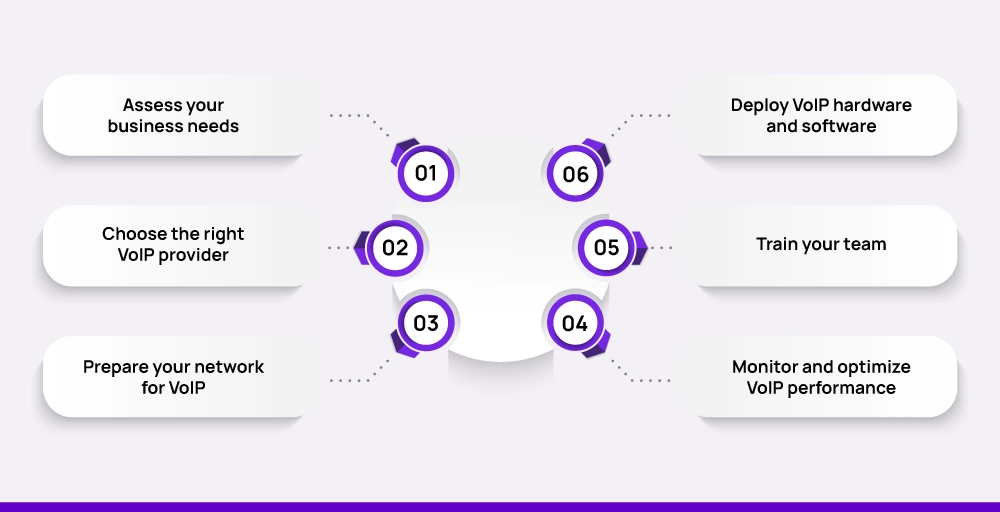
While implementing a VoIP business phone system, you must consider several things, such as business goals and assessing needs.
Here are these key factors:
- Assess your business needs: Begin by identifying the specific communication requirements of your business. This includes the number of users, call volume, and any additional features you may need.
- Choose the right VoIP provider: Do proper market research and then select the right VoIP provider that perfectly fits with your business needs, in terms of flexibility, number of users, cost, and reliability.
- Prepare your network for VoIP: To use VoIP, you need a strong internet connection. Ensure your internet connection is stable and that your network setup can support VoIP. This includes having enough bandwidth and adjusting quality of service (QoS) settings.
- Deploy VoIP hardware and software: Install necessary hardware, such as IP phones or headsets, and software applications that will enable VoIP communication.
- Train your team: Provide your staff with training on how to utilize the new VoIP system to maximize its benefits effectively.
- Monitor and optimize VoIP performance: Regularly check the performance of your VoIP system and make adjustments as needed to enhance call quality and overall user experience.
Why is a VoIP phone system essential for modern SMBs?
Modern small businesses need scalability, cost-effectiveness, and flexibility, which traditional phone systems often fail to provide. This is the main reason why most SMBs are switching from legacy to a VoIP phone system.
Businesses can easily set up and manage a VoIP business phone system, and allow teams to work from anywhere. Implementing a VoIP system in SMBs isn’t just a phone upgrade; it’s an investment in a tool that can boost efficiency and support growth.
If you are looking for one, then look no further than KrispCall. With the advanced features to manage calls and collaborate with teams, KrispCall ensures seamless telephony conversations, improved productivity, and exceptional customer experiences.
Get started with KrispCall today and transform the way you connect.
FAQ
What is the VoIP technology used for?
The VoIP technology is used for making phone calls and other forms of voice and multimedia communication over the internet.
Is VoIP worth it for small businesses?
Yes, VoIP is worth it for small businesses, as it offers significant cost savings, increased flexibility for remote work, improved scalability, and enhanced integration with other business tools.
What does VoIP convert?
VoIP (Voice over Internet Protocol) converts analog voice signals into digital data packets, which are then transmitted over the internet or other IP networks, enabling voice calls and other multimedia communications.
How does VoIP help businesses?
VoIP helps businesses by reducing communication costs, offering greater flexibility and mobility for remote or distributed teams, and providing advanced features such as video conferencing and call analytics that traditional systems often lack.