The future of VoIP is one of the most discussed topics in modern business telephony. With millions of companies rethinking how to connect with their team and clients effectively, interest in internet-based calling has surged worldwide.
Reports show that the global VoIP industry’s worth is projected to climb to up to $415.20 through the next decade.
VoIP uses the internet to replace traditional phone networks with more versatile solutions that drive efficiency and customer experience. It offers flexibility, scalability, and integration possibilities that traditional systems cannot offer.
In this blog, we are going to look back at the evolution of VoIP, along with what the future of VoIP trends holds.
The evolution of VoIP
When Voice over Internet Protocol (VoIP) first started in the mid-1990s, it was a low-cost alternative to long-distance calling. But these early VoIPs are often limited by poor audio quality and unreliable connections. As the internet rapidly expanded in the early 2000s, VoIP adoption grew quickly, with platforms like Skype bringing internet-based voice to mainstream users.
By the 2010s, hosted VoIP phone systems became the central point of enterprise telephony, offering features such as call routing, forwarding, and Interactive Voice Response (IVR) at a fraction of cost. Thereafter, the VoIP market has been continuously rising.
Market studies show the VoIP industry reached nearly $151 billion in 2024, with forecasts predicting consistent growth through 2033.
Today, VoIP supports softphones, cloud PBX, SIP trunking, and video conferencing. This entire journey reflects the future of communication with hosted VoIP, where internet-based calling underpins modern business strategies.
The present state of VoIP
In the present day, VoIP systems have become the default telephony choice for most businesses. Enterprises rely on VoIP phone systems to unify calling and messaging into one platform, while small teams benefit from the affordability and mobility of softphones.
With the retirement of legacy copper networks in several places, reliance on traditional landlines is shrinking, making cloud-based and hosted VoIP the mainstream standard.
The modern VoIP offers features like Interactive Voice Response (IVR), AI-powered call routing, and analytics to enhance customer service and operational efficiency. From supporting hybrid work environments to ensuring compliance through secure encryption, VoIP has become a foundational technology that drives the future of communication forward.
The future of VoIP technology
The future of VoIP technology is shaped by advanced cloud solutions, reliable connectivity, and the growing need for flexible communication tools. As companies adjust to hybrid work, the VoIP industry is set to expand with advanced features, broader integration, and stricter standards.
Below are the trends that define the next phase of the future of communication with VoIP:
1. Artificial intelligence and automation in VoIP
AI is quickly improving VoIP phones functions with its intelligent IVR and call analytics. AI-powered assistants now handle repetitive tasks, which cuts down response times while improving customer satisfaction.
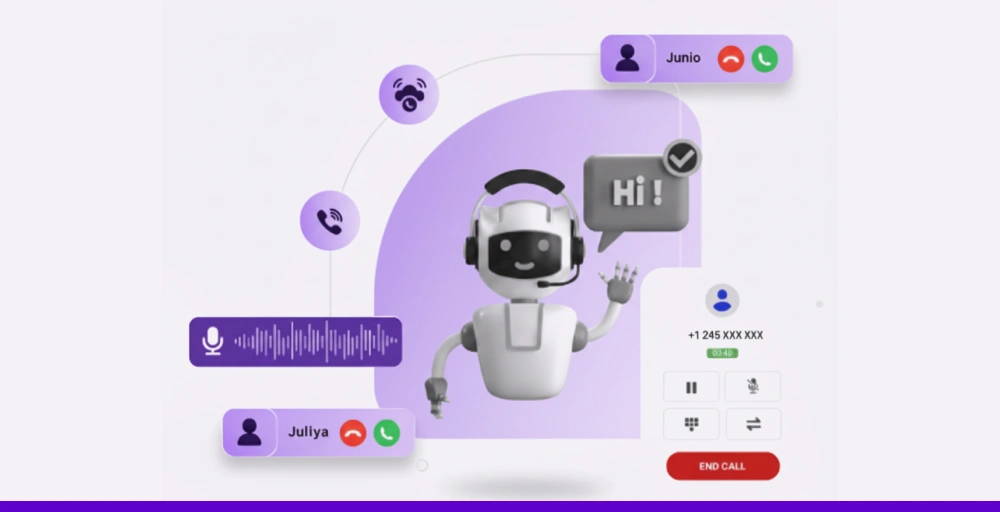
According to Deloitte, 62% of companies are already utilizing AI in customer-facing operations, and this trend is further expected to continue expanding.
Automation is also helping organizations reduce operational costs, as AI can summarize calls or trigger automated follow-ups, which ultimately improve both agent efficiency and reporting accuracy.
2. Improved security and encryption standards
Security has always been a concern in VoIP, with threats, such as SIP trunk hijacking and DDoS attacks, posing risks. Cybersecurity ventures forecast that global cybercrime costs will hit $10.5 trillion annually by 2025, pushing businesses to demand safer VoIP solutions.
In response, VoIP service providers are implementing stronger encryption protocols such as TLS and SRTP to protect voice data and prevent unauthorized access.
Additionally, organizations are increasingly using a secure VPN to safeguard connections, especially for remote teams and cloud-based VoIP systems, ensuring that calls and data remain private even over public networks.
Beyond encryption, providers are adopting fraud detection and anomaly monitoring. For enterprises, especially those in finance and healthcare, these measures ensure compliance with regulations like GDPR and HIPAA.
3. The role of 5G in enhancing call quality
The rollout of 5G networks is improving VoIP reliability with lower latency, faster speeds, and stronger mobile coverage. According to predictions by 5G America and Omdia, over 8 billion people worldwide are expected to have 5G access by 2029.
For businesses, 5G means high-definition video conferencing and voice calls without jitter or lag, even in mobile-heavy environments.
This shift will particularly benefit remote working setups, where employees depend on consistent connectivity from multiple locations.
4. Integrating VoIP with the internet of things (IoT)
The VoIP industry is integrating with IoT devices to create a smooth communication ecosystem. From call-triggered sensors in warehouses to connected healthcare devices transmitting alerts, integration makes real-time responses possible.
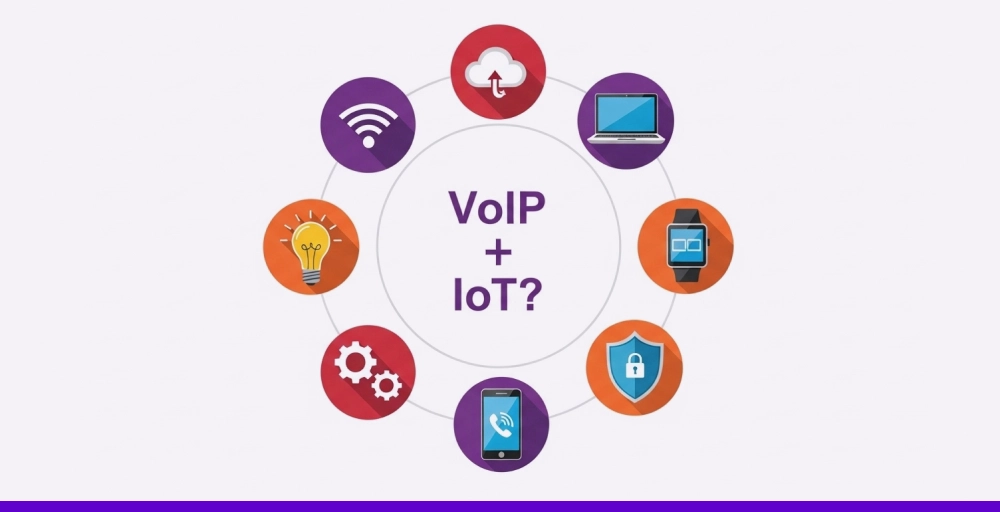
According to IDC (International Data Corporation), there will be more than 55 billion connected IoT devices or things by 2025, which will amplify opportunities for VoIP platforms.
These large opportunities present new revenue streams for VoIP providers through APIs and integrations. Businesses that adopt VoIP + IoT setups gain efficiencies by connecting devices, alerts, and workflows directly into their communication networks.
5. Advanced features and software integration
The future of VoIP technology lies in deeper integration with essential business software. Modern VoIP phone systems now connect directly with CRMs, helpdesks, and collaboration platforms, allowing teams to access call data, history, and customer insights in one place.
Advanced features like click-to-call, automatic call logging, and unified dashboards enhance customer engagement and operational visibility. Integration with project management tools, workforce applications, and video conferencing software ensures that telephony is no longer a standalone channel but a core part of digital workplaces.
6. Universal adoption of VoIP
As copper networks are being retired globally, VoIP is on track for universal adoption. That means the trend of different industries moving to digital services is very clear.
The report of Grand View Research states that the global mobile VoIP market is expected to grow at a CAGR of 12.9% from 2020 to 2030, which highlights the inevitable industry-wide migration.
Most enterprises, schools, hospitals, and government agencies are now moving to VoIP services for their reliability and cost efficiency. This wide-scale shift indicates the future of the VoIP industry as a universal foundation for global telephony.
7. Browser-based calling and WebRTC expansion
WebRTC enables browser-to-browser communication without plugins, servers, or dedicated apps. Since most SaaS platforms are implementing VoIP phones in their operations, this technology is rapidly gaining traction in 2025.
Companies don’t have to install third-party softwares and buy their subscriptions, which reduces setup costs and improves accessibility. Any users can instantly join calls directly from their browser.
The expansion of WebRTC or browser-based calling helps to create smooth and simple telephony experiences on both ends.
8. Compliance, regulations, and fraud prevention
With the development and advancement of VoIP, the need for compliance and fraud prevention also grows equally. So the regulations such as the General Data Protection Regulation (GDPR) in Europe and the California Consumer Privacy Act (CCPA) in California enforce stricter data privacy rules, which compels providers to enhance their regulations or preventive measures.
To protect businesses from those attackers, invest in fraud detection systems, lawful interception features, and infrastructure that is compliant with standard regulations. This investment will allow businesses to have reliable telephony systems that meet both operational and legal requirements at a fraction of cost.
Who should move to VoIP now?
Any organization still relying on legacy phone lines should consider shifting to Voice over Internet Protocol without delay. Copper networks are being retired gradually in many regions, which is making traditional telephony less reliable and more costly to maintain.
The move to VoIP is especially important for growing businesses, remote teams, customer service centers, and industries where compliance and secure calling are essential. For organizations looking to scale and stay competitive, the time to migrate is now.
Conclusion
VoIP has matured from a low-cost alternative to long-distance calls into the core of modern telephony. Its role continues to expand as businesses adopt AI-driven features, integrate with IoT, and benefit from the reach of 5G and browser-based calling. With copper networks being phased out worldwide, VoIP is now a standard for reliable and scalable communication.
VoIP offers flexibility, stronger security, and tools that fit seamlessly into the digital workflows of any business. Companies that make the transition today will not only reduce costs but also position themselves to thrive in an increasingly connected world.
FAQs
Does VoIP actually have a future?
Yes, absolutely. VoIP’s future is brighter than ever, and it’s going to grow bigger and bigger in the coming days. With its cost-effectiveness, flexibility, scalability, and support for remote work, it is favoured over traditional copper lines worldwide.
Is VoIP outdated?
No, VoIP is not outdated. It is very current and expanding rapidly. Modern VoIPs deliver encrypted calling, AI-assisted IVR and call summaries, browser-based dialers, and integrations with CRMs and helpdesks.
What are some benefits of VoIP?
Some of the benefits of VoIP are:
- Lower cost
- Flexibility for hybrid work
- Advanced features like IVR, call queues, call recordings, and analytics
- Integrations with CRMs
- Scalability
What are some disadvantages of VoIP?
The 5 disadvantages of VoIP are:
- Heavy dependence on power and the internet
- Poor network results in latency or jitter
- Vulnerable to fraud and cyberattacks
- Inaccurate location data
- Incompatible with older systems
What is the VoIP trend in 2025?
Some of the key VoIP trends in 2025 are:
- AI in telephony
- Browser-based calling
- 5G-assisted quality and mobility
- Integrations with IoT devices or things
- Improved or enhanced security
What types of companies have been displaced by Voice over IP (VoIP)?
Voice over IP displaced traditional phone service providers, such as long-distance telephone carriers and companies that operated Private Branch Exchange (PBX) systems, along with the providers of ISDN.