

Terms like SIP and VoIP can sound confusing, whether you’re setting up communications for a startup, upgrading a small business phone system, or modernizing enterprise telephony.
Simply put, SIP (Session Initiation Protocol) and VoIP (Voice over Internet Protocol) both enable internet-based calling, but they work differently. Many businesses compare SIP trunking vs VoIP to understand which option fits their communication strategy.
In this blog, you’ll learn the basics of SIP VoIP, its main differences, pros and cons, and how to choose the right solution for your business needs.
✨ Key Takeaways
- VoIP is the technology used for making phone calls over the internet, while SIP trunking is a service that connects an existing phone system to a VoIP network.
- SIP trunking connects your existing on-premise phone system (PBX) to the internet, giving you control and scalability for high call volumes, while VoIP is a ready-to-use, feature-rich phone system hosted in the cloud.
- Choosing between SIP trunking and VoIP depends on your business size, existing infrastructure, and communication needs, balancing control, cost, and feature requirements.
What is VoIP?
VoIP (Voice over Internet Protocol) is a technology, often referred to as IP telephony, that lets you make phone calls using the internet instead of traditional phone lines. It converts your voice signals into digital data packets that travel over the internet to connect calls.
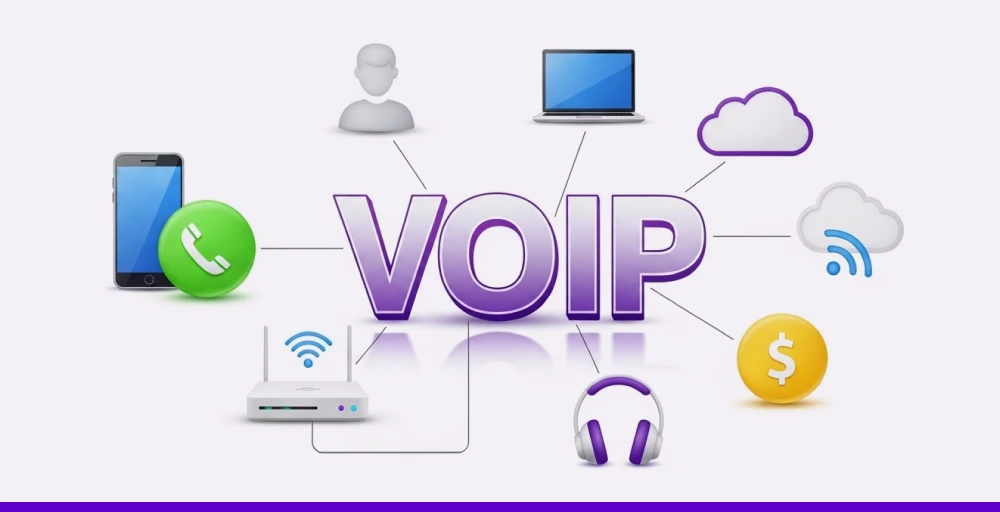
When you speak into a VoIP trunk, VoIP phone, or app, your voice is turned into digital signals and sent over the internet. On the other end, these signals are converted back into sound so the person you’re calling hears your voice clearly. This process uses the VoIP protocols rather than traditional telephone circuits.
What is SIP trunking?
SIP trunking is a technology that uses the internet to transmit voice, video, and other unified communications between a business’s phone system (often an IP PBX) and the public telephone network. It enables businesses to connect SIP-enabled phones (SIP phones) to their PBX and make or receive calls online via VoIP SIP trunks.
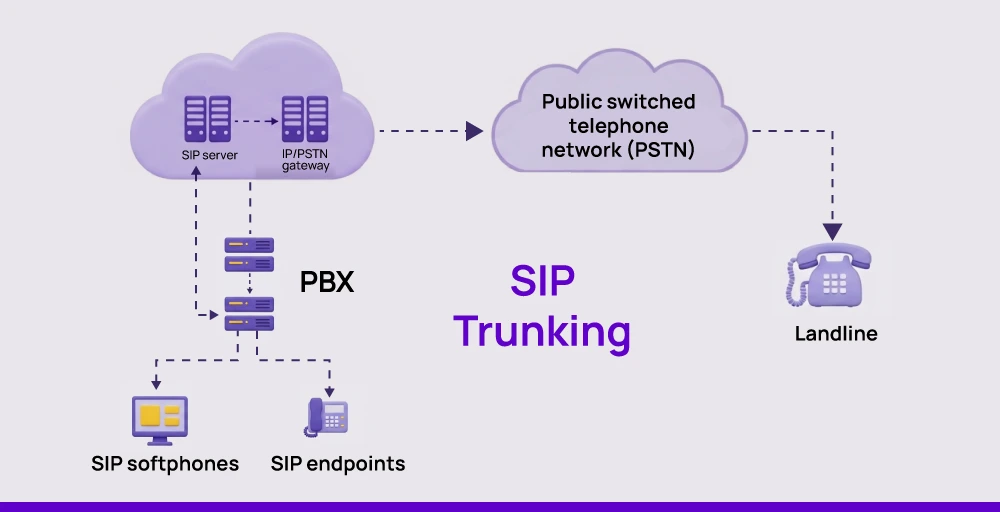
SIP works by sending voice data from your IP PBX over the internet instead of traditional phone lines. When you place a call, the SIP trunk transmits it to your provider, who routes it either to another VoIP system or the public phone network. Incoming calls follow the same path in reverse, allowing seamless two-way communication without physical phone lines.
Traditional phone lines or POTS lines use circuit-switched networks where a dedicated path is reserved for the entire call. SIP uses packet-switched networks (the Internet), sending data in small packets that find their own route. This makes SIP more flexible, cost-effective, and scalable than old phone lines.
SIP trunking vs VoIP: Main differences
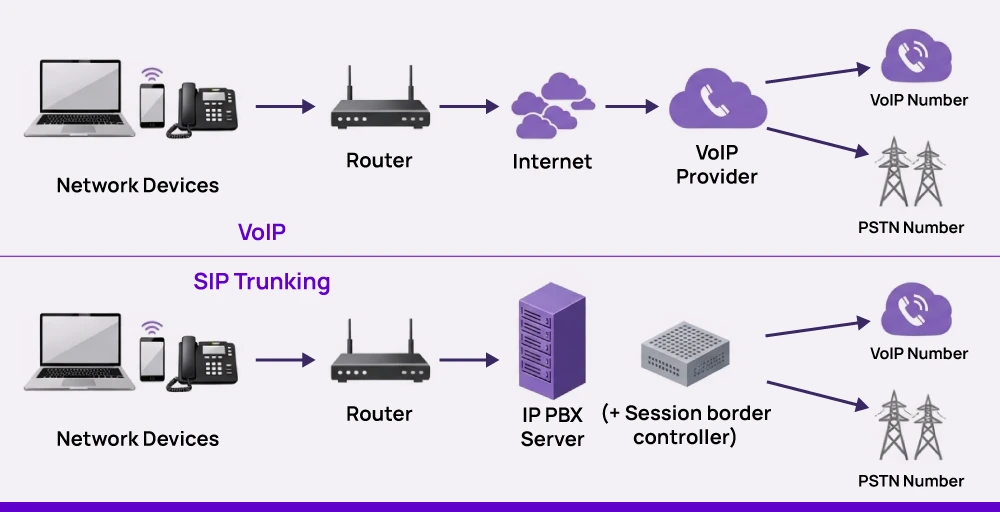
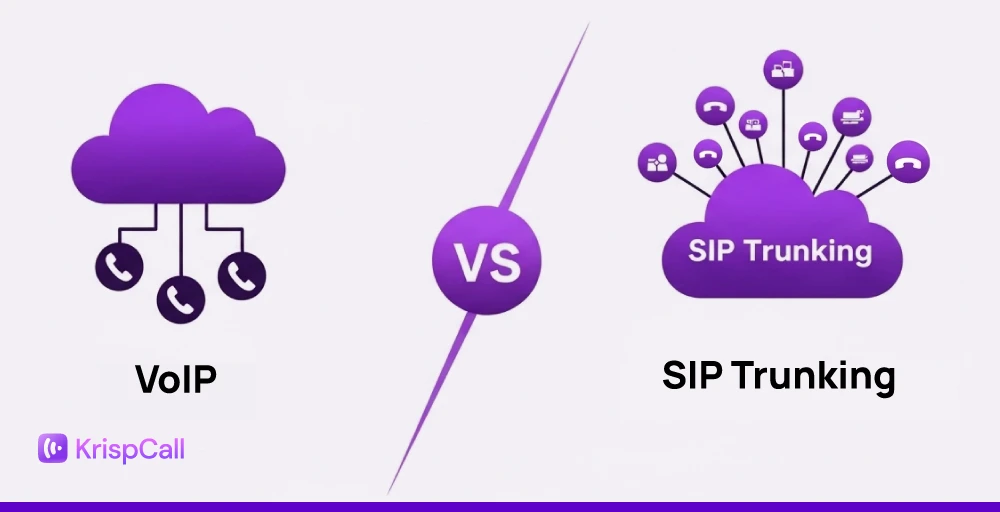
One of the significant differences between SIP trunk and VoIP is that SIP trunking connects your existing on-site phone system (IP PBX) to the internet to enable VoIP calls. At the same time, cloud-based VoIP services host everything remotely for you using a VoIP service provider.
SIP trunking is a method for setting up phone service, and VoIP is an internet-based calling technology. SIP trunking actually uses VoIP technology to work. You can get SIP calling through SIP trunking or through other methods, but SIP trunking always requires VoIP solutions.
With SIP trunk providers like Twilio, you manage your own phone equipment on-site. With cloud VoIP providers like KrispCall, they handle all the equipment and infrastructure remotely; you just use the service.
Here’s a quick comparison table of basic VoIP vs. SIP trunking:
| Feature | VoIP | SIP Trunking |
| Function | An all-in-one internet-based calling solution for your team’s communication needs. | A virtual link between your PBX and the public phone network, giving PSTN access through the cloud. |
| Equipment | Internet connection, VoIP desk phone or softphone app, VoIP server, and headset (optional). | On-premise or cloud PBX, SIP trunk provider, mobile phone, and a reliable internet connection. |
| Security | Typically encrypted with SRTP/TLS; it depends on the provider’s security measures. | Security depends on PBX configuration and the provider’s encryption; there is a higher risk if the PBX is poorly configured. |
| Monthly Cost | $20–$40 per user for standard business plans; often includes unlimited domestic calling. | $12–$20 per channel or $20–$30 per channel (unlimited domestic); international rates vary. |
| International calling | Usually available as an add-on package or pay-as-you-go. | Often offers lower international rates compared to VoIP per-user plans. |
| Best for | Startups, small to medium businesses, and remote-first teams want a simple, flexible solution. | Mid-size to large enterprises with PBX systems and high-volume call requirements. |
VoIP pros and cons
Businesses widely use voice over IP (VoIP) for its cost-effectiveness, more flexibility, and feature-rich voice communication options. While it delivers many advantages, there are also potential challenges to consider before committing to the technology.
VoIP pros
Businesses widely use Voice over IP (VoIP) for its cost-effectiveness, more flexibility, and feature-rich voice communication options.
The benefits of Voice over IP are:
- Cost-efficiency: Lower call rates and reduced infrastructure expenses compared to traditional phone or individual lines. Over time, businesses can achieve significant savings, especially using a VoIP phone system for frequent long-distance or international calls.
- Easy setup and low maintenance: Easy to set up with little to no specialized hardware and low ongoing maintenance. Most providers offer plug-and-play solutions, reducing the need for dedicated IT resources.
- Mobility and remote work support: Allows employees to make and receive calls from anywhere with an internet connection. This supports hybrid work arrangements and ensures business continuity during travel or disruptions.
- Feature-rich communication: Offers video conferencing, instant messaging, file sharing, and team collaboration tools. These features often come built into the same platform, reducing the need for multiple separate subscriptions.
- Third-party app integrations: Connects seamlessly with CRM, project management, and helpdesk platforms. This allows calling data to flow directly into business systems, improving workflow efficiency and customer service.
VoIP cons
Some potential challenges of VoIP are:
- Internet dependency: Call quality and reliability rely heavily on the stability and speed of your internet connection. A poor network setup can cause delays, jitter, or dropped calls.
- Recurring subscription costs: Monthly or annual costs for service plans and premium features can add up. While usually cheaper than traditional phone systems, costs can still climb as you scale up users or add advanced features.
- Overlap with existing PBX systems: If a traditional PBX is already in place, VoIP may duplicate some functions unnecessarily. This can lead to wasted investment unless the migration is planned strategically.
SIP trunking pros and cons
Every product or service has its pros and cons, and SIP trunking is no exception.
SIP trunking pros
Key benefits of SIP trunking include:
- High call volume capacity: Easily supports large numbers of simultaneous calls, making it ideal for call centers and enterprise-level communications. This helps ensure that peak periods or seasonal spikes don’t disrupt customer service.
- Uses existing PBX hardware: Allows businesses to keep their current PBX systems, reducing the need for new equipment. This makes it an attractive choice for companies looking to modernize without a complete infrastructure overhaul.
- HD voice quality: Delivers clear high-definition audio for professional communication. Higher audio fidelity can improve customer experience and reduce misunderstandings in critical conversations.
- Flexible scaling: Add or remove channels as your business needs change without replacing infrastructure. This adaptability makes it cost-efficient for growing companies or those with fluctuating call volumes.
- Integration with advanced enterprise systems: Can connect with CRM platforms, contact center software, and other business tools for improved efficiency. Such integration can streamline workflows and create a more unified communication ecosystem.
SIP trunking cons
Disadvantages of SIP trunking are:
- Requires telecom expertise or IT support: Setup, configuration, and maintenance often need technical skills. Without in-house experts, companies may have to rely on external providers for changes and troubleshooting.
- Security vulnerabilities: Without encryption and monitoring, systems may be exposed to fraud or hacking. These risks can be mitigated with strong security protocols and continuous monitoring.
- Fewer native features than VoIP platforms: Features like instant messaging, video conferencing, or built-in voicemail may require additional services or software. This can lead to higher costs or more complex system integration over time.
Choosing between SIP trunking and VoIP
Selecting the right communication technology depends on more than just cost; it’s about aligning the solution with your company’s current operations and future growth or strategy.
According to VoIP data, users can reduce monthly communication expenses by nearly half, while SIP trunking may be more economical for organizations with very high call volumes. Keeping this in mind can help guide your decision based on both budget and operational needs.
1. Company size and growth plans
Smaller businesses or startups often benefit from VoIP’s simplicity and quick setup, especially when accommodating remote employees. At the same time, larger organizations with high call volumes may prefer SIP trunking for its scalability and cost efficiency. If you anticipate rapid growth, think about which system can expand seamlessly without significant infrastructure changes.
2. Existing telecom infrastructure
If your business already has a PBX system in place, SIP trunking can make better use of your existing investment. PBX owners often lean toward SIP trunking; startups often prefer VoIP or UCaaS platforms. On the other hand, if you’re starting from scratch, VoIP might be the faster and more cost-effective option.
3. Budget and total cost of ownership
While VoIP typically has predictable per-user pricing, SIP trunking can offer lower per-call rates for heavy users. Look beyond the initial price and consider setup costs, maintenance, and the potential need for additional licenses or hardware.
4. Feature requirements
VoIP services often come with built-in extras like video conferencing, messaging, and call recording. SIP trunking may require separate integrations to achieve the same capabilities, which can influence both cost and complexity.
5. Remote work capabilities
VoIP platforms are usually designed with remote and mobile teams in mind, offering apps and cloud-based access from anywhere. SIP trunking can support remote work and various VoIP applications, too, but it may need additional configuration or PBX integration to provide the same flexibility.
Common use cases of VoIP & SIP trunking
Both of the solutions, VoIP and SIP trunking, are used by businesses. Below are some of their use cases:
VoIP use cases
VoIP is a versatile communication tool that works well across different business models and team setups. Its flexibility, scalability, and feature set make it a strong choice for modern organizations looking to move away from traditional landlines.
Some of the most common ways businesses use VoIP include:
- Supports remote and distributed teams: Because calls are made over the internet, team members can work from anywhere using laptops, smartphones, or VoIP desk phones. This makes it ideal for companies with hybrid or fully remote workforces.
- Ideal for small and medium businesses: VoIP’s low upfront costs and straightforward setup allow SMBs to access enterprise-level communication tools without the heavy price tag. It also eliminates the need for complex on-site hardware long term contracts.
- Enables voice and video calls: Most VoIP platforms include both audio and video conferencing capabilities, allowing teams to communicate in the way that best suits the situation. This reduces the need for separate conferencing software.
- Easy to scale with business growth: Adding new users or phone lines is as simple as adjusting your plan in the provider’s admin portal. This means your telephone system can grow in step with your team without costly infrastructure changes.
SIP trunk use cases
SIP trunking bridges the gap between traditional telephony and cloud capabilities, offering a cost-effective way to expand communication features without a full system replacement.
Common use cases of sip trunking includes:
- Adds cloud features to the existing PBX: SIP trunking allows businesses to integrate cloud-based services like call analytics, IVR, and CRM connections into their current PBX, giving them modern capabilities without starting from scratch.
- Replaces old phone lines with internet calls: By swapping legacy copper lines for internet-based trunks, companies can reduce costs, improve call quality, and avoid the limitations of traditional telephony infrastructure.
- Unifies communication across locations: Multi-site organizations can link their PBX systems through SIP trunks, enabling direct dialing and shared resources between branches without expensive interoffice SIP phone lines.
- Connects cloud PBX to traditional phone networks: Businesses using cloud-hosted PBX systems can use SIP trunks to route calls to and from the public switched telephone network (PSTN), ensuring compatibility with any phone number worldwide.
KrispCall: Your all-in-one SIP trunking & VoIP solution
When comparing SIP trunking and VoIP, the key difference lies in how they provide phone services. VoIP is a fully online phone system that manages voice calls, messages, and often video meetings through the internet.
In contrast, SIP trunking connects an existing PBX system to the internet for calls. This offers more control, call routing, scalability, and cost savings for businesses with high call volumes.
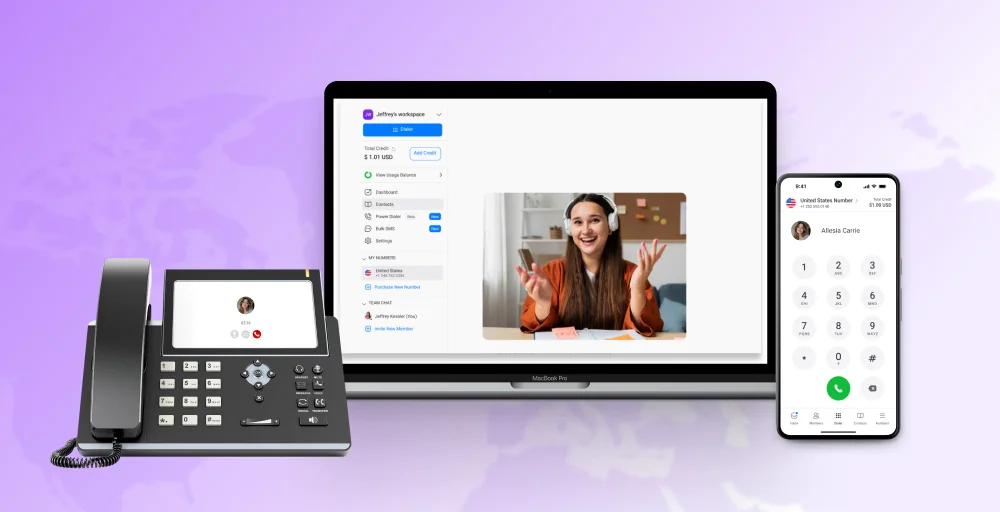
With KrispCall, you can use both SIP and VoIP service. KrispCall’s phone system can be set up with SIP support for deskphones like Grandstream IP Phone or Yealink T21P, or be used as a softphone. This gives you the benefits of both services from one easy-to-use interface.
Upgrade your business phone system with KrispCall. It’s the perfect blend of SIP trunking and VoIP, giving you one powerful solution. Get started today!