

Still paying hefty phone service bills? You might be spending more than you realize.
A traditional landline phone system comes with mounting costs, limited flexibility, and hidden fees that quietly drain business budgets. VoIP, on the other hand, delivers internet-based telephony with broader features, predictable pricing, and long-term savings.
In this blog, we’ll compare VoIP vs landline by looking at cost, features, reliability, and scalability to determine which option truly offers better value for your business communications.
✨ Key Takeaways
- Traditional landlines are more expensive than VoIP because they require physical installation and maintenance.
- VoIP offers more advanced features like voicemail and call recording, while a traditional landline phone system only supports basic voice service.
- Landline provides more reliability than VoIP, which mostly depends on a stable internet connection.
How do traditional landline systems work?
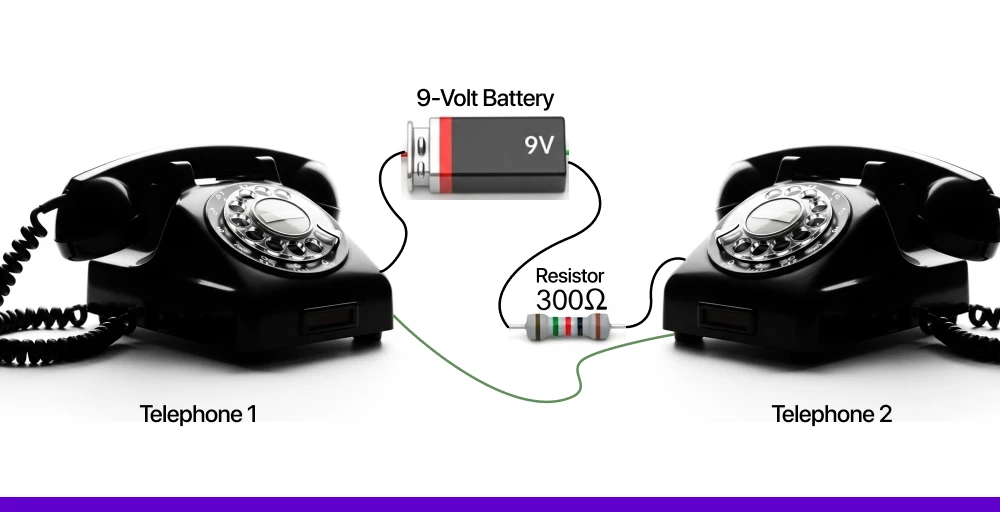
Traditional landline phones work by transmitting voice calls as electrical signals through copper wires connected to the Public Switched Telephone Networks (PSTN). Phone calls travel through physical phone lines and switches until they reach the recipient.
Businesses often use on-site PBX systems to manage multiple desk phones on a shared network. While landlines offer a stable connection and function independently of internet bandwidth, they require significant physical infrastructure for installation and expansion.
How does VoIP work?
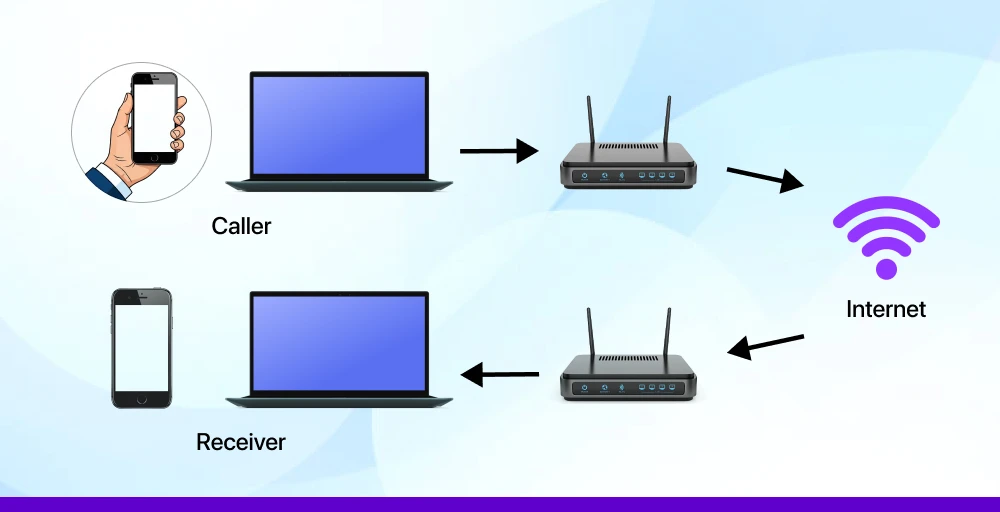
VoIP (Voice over Internet Protocol) converts your voice into small digital data packets and sends them over the internet instead of landline telephone systems. These packets are then converted back to the sound using VoIP codecs (compress + decompress) before the call connects to the traditional lines or another VoIP user.
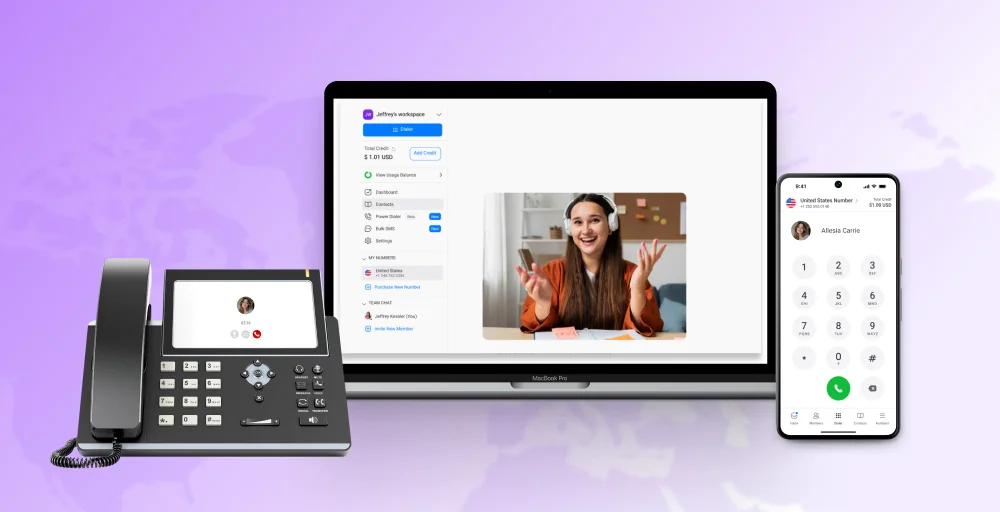
VoIP solutions allow calls from cell phone apps, desk phones, or a computer, as long as there is a stable internet connection. This flexibility eliminates the need for complex wiring or on-premise phone hardware.
VoIP vs landline: Key differences
Here’s a quick comparison between VoIP and landline phones to showcase the key differences at a glance.
| Factor | VoIP | Landline |
| Cost | Lower setup and monthly fees | Higher installations and call costs |
| Features | Advanced features and flexibility | Basic calling features only |
| Implementation | Quick and simple setup | Requires physical wiring |
| Reliability | Dependent on the internet and power | Works even during outages |
| Security | Encrypted but susceptible to vulnerabilities | Closed and inherently secure |
| Scalability | Easily scalable with cloud solutions | Expansive and slow to scale |
1. Cost
VoIP services are more affordable compared to landlines. They require minimal or no extra hardware during setups. It also charges less for long-distance or international calls and offers monthly subscription plans.
Landlines, on the other hand, involve high installation costs, hardware fees, and long-distance charges, as well as ongoing maintenance fees.
In the long run, Voice over Internet Protocol (VoIP) saves significantly on operational costs by eliminating long-distance fees and maintenance expenses. If you’re ready to get rid of your landline but keep your number, switching to VoIP is the most cost-effective way to do it. Cloud-based VoIP systems like KrispCall offer enterprise-level features at just $15 per user per month.
2. Features
VoIP systems offer basic calling features along with features like call forwarding, auto-attendants, voicemail-to-email, call analytics, video conferencing, and integrations with unified communication systems.
A traditional landline phone system supports basic wholesale voice service and telephone service functions, but lacks modern VoIP solutions features that support customer calls across multiple locations.
3. Implementation
Setting up a VoIP system requires a reliable internet connection, along with a VoIP business phone, a VoIP adapter, or an application on your PC or mobile device.
Landlines require a dedicated network of copper wires, on-site hardware, analog phone infrastructure, and coordination with your local phone company. The setup process is more time-consuming and less flexible.
4. Reliability
VoIP uptime depends on your solid internet connection and power supply. However, reputable phone service providers host their systems in multiple redundant data centers, ensuring VoIP call quality and minimizing downtime.
Landlines work during internet or power outages, giving them a slight edge in emergencies.
5. Security & Compliance
VoIP calls travel over the Internet. It is vulnerable to interception while travelling from one end to another if it is not encrypted properly. Choosing a reputable VoIP service provider with strong security measures and encryption helps mitigate this risk.
Landlines are inherently secure because they run on closed networks. But this security still cannot outweigh the advanced features and cost-effectiveness of VoIP.
6. Scalability
VoIP is more scalable than landlines. Here, adding new users or locations is as simple as updating your plan or installing apps.
Adding new users to analog phone systems requires additional physical lines, hardware, and installation, which makes the whole scaling process slow and costly.
Benefits of using traditional landlines
Traditional landlines may not be suitable for every business type, but they do offer advantages that help them stay relevant to this day:
- Reliable during power outages: Many landline phones can operate solely through the telephone line, allowing calls to go through even when the electricity is down.
- Supports legacy equipment: Devices like fax machines, older alarm systems, and certain modems work natively with analog landlines without requiring adapters.
- Stable call quality: The established copper network provides consistent voice clarity without relying on internet bandwidth or signal strength.
Who should use landlines?
Landlines are well-suited for businesses in regions with unreliable internet connections or frequent power interruptions. Businesses that are not planning to scale up should stick to landlines. If your business doesn’t need any VoIP features and relies on equipment such as fax machines, phone jacks, hardware phones, or modems, then landlines are the best interaction solution for you.
Benefits of using VoIP systems over landlines
Some of the benefits of using a VoIP system over traditional landlines are:
- VoIP allows calls from anywhere using mobile apps or computers, and adding users or locations.
- Wideband audio provides clear, static-free calls that outperform traditional analog lines.
- VoIP requires minimal hardware or softphones, and a new line or extension can be activated quickly without rewiring.
- Services like auto-attendants, call forwarding, analytics, and voicemail-to-email come standard with many VoIP providers.
- According to VoIP stats, employees can save an average of 32 call minutes per day using VoIP, thanks to faster call routing and integration with communication tools.
- Monthly fees, international calls, and additional extensions are often far more affordable compared to landline systems.
Who should use a VoIP phone system?
If your business is spread across different locations throughout the nation or the world, a VoIP system is the best choice for your business. VoIP offers cheaper international calls and can work from anywhere with a reliable internet connection.
A VoIP phone system is scalable, so if your business plans to scale up in the future, VoIP makes it easier with minimal hardware infrastructure requirements.
Landline vs VoIP: Which is the best for your business?
Both landline and VoIP systems have their place in business telephony.
Landlines provide stability and compatibility with legacy devices, making them practical for businesses with limited internet access or no plans to expand. VoIP, however, offers broader features, lower long-term costs, and the flexibility to scale as your business grows.
For most modern businesses, VoIP is the smart choice. A VoIP provider like KrispCall makes switching to VoIP simple. With its cloud-based calling, clear audio, and tools like call analytics, auto-attendants, and mobile apps, it helps your team stay connected anytime, anywhere, without the hidden costs of traditional phone systems.