

Is your VoIP system truly secure? Just because it’s functioning well doesn’t mean your VoIP security isn’t at risk. You often don’t know your system has been targeted until the damage is already done.
VoIP is a powerful and innovative tool for business; however, transmitting voice communications over the internet introduces several vulnerabilities that cybercriminals could exploit. Weak passwords, outdated firmware, or unused accounts can open the door to eavesdropping and data theft.
In this blog, you will learn about the definition of VoIP security, along with common types of risks and ways to identify them, and how to choose the right VoIP service provider.
What is VoIP security?
VoIP security refers to the measures or technology to protect the Voice Over Internet Protocol (VoIP) communications from cyber threats such as unauthorized access, eavesdropping, and data breaches. It is essential for maintaining the privacy, integrity, and reliability of voice and data transmitted over cloud phone systems.
Effective VoIP security combines multiple measures, including encryption protocols like SRTP and TLS to protect voice data during transmission, and authentication processes to verify the identity of users and devices.
How Does VoIP Work?
Here are the steps showing how VoIP works.
- Voice signal conversion: When you speak into a smartphone or any other VoIP device, the microphone captures your voice as an analog sound wave. Then, an analog-to-digital converter (ADC) transforms these waves into digital data packets.
- Data compression: After that, it encodes your digital voice information with a VoIP codec (coder-decoder).
- Packetization: The compressed data is split into small pieces known as packets. Each packet consists of part of your conversation.
- Transmission: The data packets travel all over the internet, similar to email or web pages, to reach the intended destination.
- Reassembly: When data reaches the right destination, the data reassembles into the original audio to deliver the spoken words clearly.
- Decompression and conversion: Here, packets are decoded and converted from digital signals back into waves.
- Playback: Finally, the recipient hears your voice through the speaker instantly, making conversation natural and real-time.
Why is VoIP different from a traditional phone system?
Before the rise of VoIP phone system, people used to make calls over the Public Switched Telephone Network (PSTN), also called Plain Old Telephone System(POTS). This relied on analog signals, which made it vulnerable; it was not very secure, as anyone with access to phone lines could easily tap into conversations.
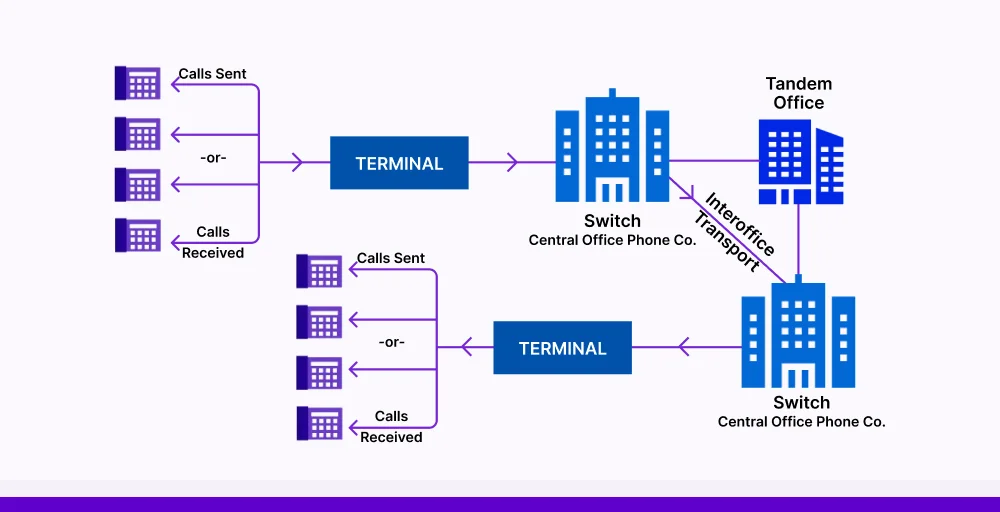
Traditional phone systems rely on physical copper wires and a circuit-switched network. It is inflexible and can be expensive to maintain, especially for businesses that require multiple lines, and adding new features often requires costly hardware upgrades.
On the other hand, VoIP uses the Internet to transmit voice into digital packets. This makes it more secure, flexible, and cost-effective. Unlike a traditional phone system, it does not require physical wiring and maintenance tools. It allows businesses or individuals to make phone calls from anywhere on any device, significantly reducing phone system costs.
Moreover, VoIP offers advanced and powerful features such as call forwarding, voicemail to email, auto attendant, and software-based management that traditional phone systems cannot provide. It is easy to scale up or down, allowing businesses to add or remove users and features through software. VoIP is a wise choice for businesses to communicate in the modern world.
Why can’t you ignore VoIP security?
Businesses worldwide lose an estimated $1.5 billion annually due to VoIP fraud, which illustrates how expensive and widespread the risk can be.
These figures make it clear: neglecting VoIP security isn’t just risky, it can cost your business millions. Whether it is a small business or a large enterprise, security is crucial to keep the data and information safe and protected.
Without a secure VoIP phone service, your business can be an easy target for hackers. You can lose financial resources from toll fraud, including stealing the information of clients and employees, or even confidential business data.
Breaching data affects your company’s reputation and erodes customer trust. Here’s why you can’t ignore VoIP security:
- High financial risk: VoIP breaches can lead to costly data losses and financial damage.
- Increasing fraud threats: VoIP phone systems are often targeted for toll fraud and unauthorized access.
- Growing cyberattacks: Weak security makes VoIP vulnerable to hacking and eavesdropping.
- Damage to reputation: Security incidents can erode customer trust and harm your brand.
- Regulatory compliance: Many industries require secure communications to meet legal standards.
Top VoIP security threats.
Here are some of the main VoIP security issues and threats that businesses need to know about to protect their communication systems effectively.
Toll fraud and international call hijacking
Toll fraud happens when unauthorized users gain access to your system and make expensive, often international calls or premium calls, leaving you with a huge bill. These attacks drain your business resources and can be difficult to detect until the damage is already done.
You can avoid this by blocking international calls you don’t need and checking your call logs regularly. It’s also essential to use strong, unique passwords for all VoIP accounts and devices, reducing the chance of brute-force attacks.
DDoS (Distributed Denial of Service) attacks
DoS attacks target systems by flooding them with massive amounts of VoIP traffic, making them crash or stop working. This can cause call drops or make your whole business phone service go offline. These attacks are not often detached and cannot be figured out until VoIP users start complaining.
Protecting against DDoS attacks requires deploying multiple layers of defense, including firewalls that filter unwanted traffic and Intrusion Prevention Systems (IPS) that identify and block malicious behavior. Furthermore, routing traffic through a proxy server can help mask your system’s actual IP address, making it significantly harder for attackers to launch a direct assault.
Phishing, vishing, and spoofing
Phishing, also known as vishing, occurs when scammers call and pretend to be someone you trust, like a bank or IT support, and trick you into sharing private information. It’s hard to stop with just tech tools, so offering regular training sessions to your team to help spot these fake calls is the best defence.
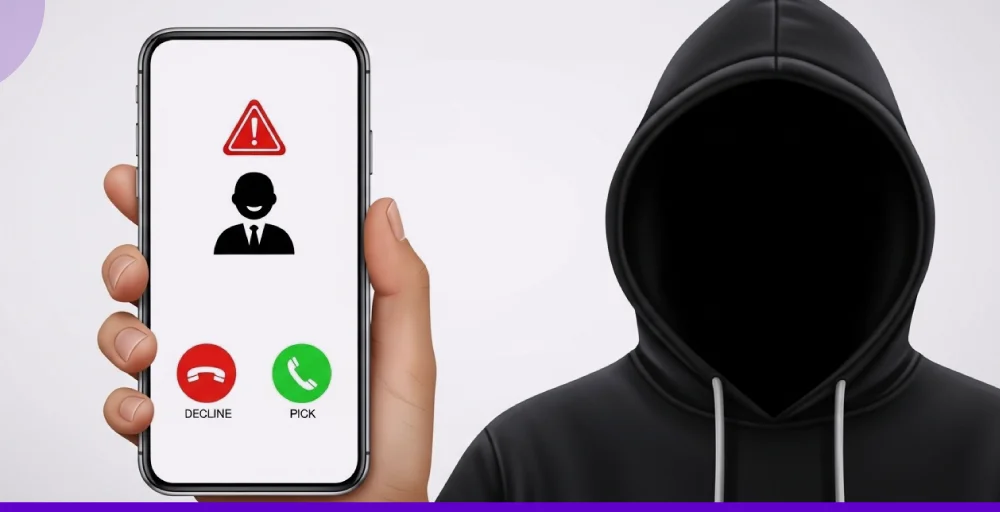
In spoofing, attackers disguise themselves as someone else using a fake account or identity to gain the victim’s trust. This can lead to data breaches, financial loss, or unauthorized access.
Eavesdropping and man-in-the-middle attacks
If VoIP calls aren’t fully secured, hackers may secretly listen in, especially over public Wi-Fi or on outdated systems. Encrypt voice data and use secure networks to help block such eavesdropping. Implementing end-to-end encryption and conducting regular monitoring further reduces the risk of these security breaches.
In the man in the middle, attackers enter into the conversation between two parties, without their knowledge. The attacker can not only listen to the call but also alter or reroute the data being transmitted.
Malware, spyware, and ransomware threats
Malware, spyware, and ransomware are common security threats. Attackers usually target through email with virus-infected attachments, where tools like DMARC analyzer monitoring can help detect spoofed domains and prevent phishing-based attacks. When someone clicks on an unknown link or downloads unsafe files, VoIP phones and apps can get infected.
Once infected, hackers can listen to calls or steal your sensitive information. To stay safe, regularly update your anti-malware software and avoid suspicious downloads. Running frequent security scans and using strong endpoint protection tools can detect and eliminate malicious software before it causes harm.
Weak passwords and misconfiguration
Weak passwords and system misconfigurations are among the easiest vulnerabilities for attackers to exploit. Simple or reused passwords can be cracked using brute-force attacks, giving unauthorized users direct access to VoIP systems.
Additionally, misconfiguration happens when VoIP systems are set up improperly or incompletely, often leaving encryption disabled and creating vulnerabilities that hackers can easily exploit to breach network security.
Changing default logins and using strong, complex passwords is a simple but powerful way to protect your VoIP setup. Also, regular security audits and configuration reviews help identify and fix misconfigurations before they are exploited.
Data breaches and identity theft
VoIP systems store sensitive data such as call logs, client contact details, and user credentials. Such breaches can lead to identity theft, financial fraud, and loss of competitive advantage. Preventing data breaches requires a comprehensive approach, including encrypting data both in transit and at rest.
Implementing strict access controls and continuously monitoring network activity for suspicious behavior can help you secure your business data.
VoIP service downtime risks
A VoIP system relies heavily on the internet connection; any disruption, like a power outage, cyberattack, or system failure, can affect communication. The longer the downtime, the greater the damage to productivity and customer trust.
Proactive monitoring, planning, and secure infrastructure help to keep the VoIP system secure and safe.
VoIP security best practices for businesses
Here are some of the best security practices for businesses to avoid VoIP security risks:
1. Use strong passwords & enable MFA
To protect your business’s information, it is crucial to use a strong password. Hackers can easily exploit weak login details, so use complex and unique passwords. Avoid using straightforward and predictable passwords like “12345.”
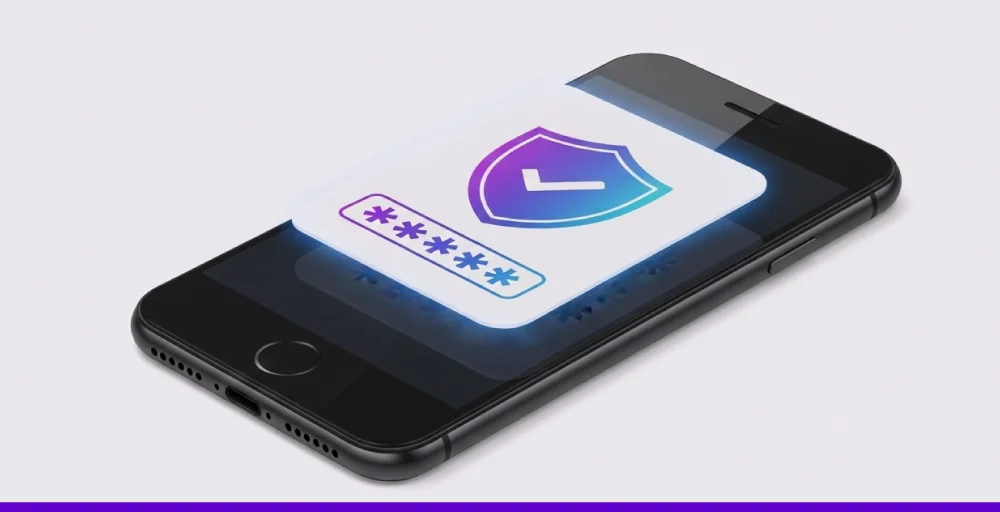
Also, enable multi-factor authentication (2FA) on all VoIP devices and accounts to prevent unauthorized users from accessing the device remotely.
2. Keep software, firmware & endpoints updated
Regularly update softphone, firmware, IP phones, and applications to ensure your system is protected. Outdated systems are a potential attack for hackers. Enable automatic updates and regularly check for patches to protect your VoIP network from vulnerabilities.
3. Install firewalls, intrusion detection & call monitoring
Apply the latest security patches, and deploy firewalls and intrusion detection systems to recognize and inspect network traffic in real time. Pair these tools with call monitoring to detect unauthorized activity such as phishing, toll fraud, and malware before it increases.
4. Restrict system access by role & location
Implement role-based permissions so employees can access tools only when needed. Similarly, add location restrictions or IP-based access controls to block logins from unknown locations, reducing security risks.
5. Monitor for unusual call patterns or behaviour
Monitor the activities, like call logs and system activity, to recognize early signs of security threats. Identify unexpected spikes like call volume, global calling, or calls after business hours. Understanding these patterns is essential for preventing fraud and security breaches.
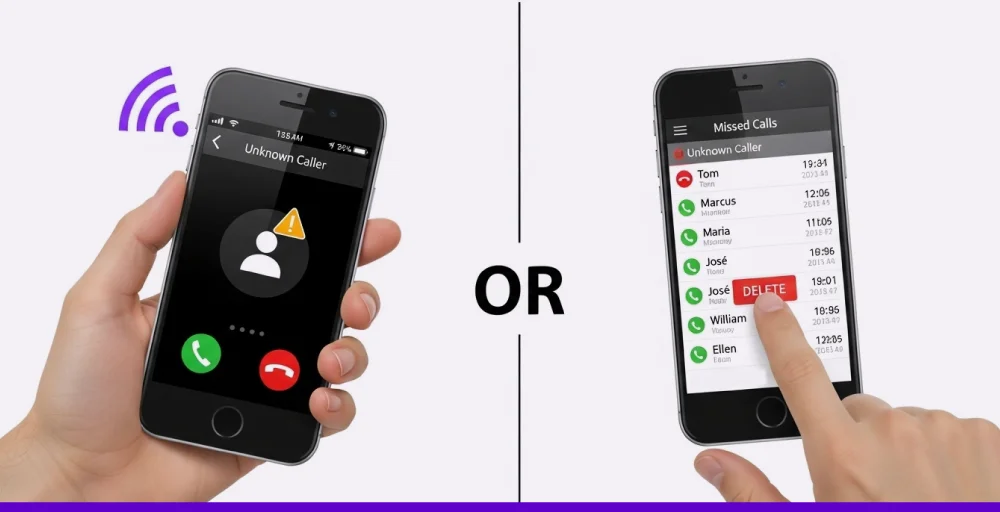
6. Backup configurations and call data regularly
Regularly back up your VoIP system and call data to ensure quick recovery if something goes wrong. Storing backups securely offsite or in the cloud helps prevent data loss and maintains system functionality.
7. Train employees in cybersecurity hygiene.
Provide knowledge to the employees to identify social engineering scams, phishing, toll fraud, and malware. Also, teach them to avoid suspicious links and report them as soon as possible. Understanding cybersecurity helps employees become aware of potential threats and attacks.
8. Regular security audits & penetration tests
Monitor system logs for irregular activities such as failed login attempts, unusual call volumes, or configuration changes. Pair this with user training so your team can recognize phishing calls and malware threats. These actions help maintain awareness and stay updated.
What should you look for in a secure VoIP provider?
A secure VoIP provider is crucial for ensuring reliability, security, and compliance with your communication system. Any cloud PBX (Private Branch Exchange) solution should meet the security protocols that match your industry’s needs. Before making a decision, ask these questions of the service provider.
- What accreditations do you hold?
- Do you rely on third-party software or tools?
- How do you train and retrain your staff on security strategy?
- What’s your process for handling security incidents?
- Do you support TLS and SRTP encryption for calls?
1. Accreditations
After answering the above question, the next step is to match your own VoIP requirements. Some of the top certifications are described below:
HIPAA compliance: If your business is related to the health service sector. Choose a service provider that ensures the protection of the information and data of healthcare patients, including phone calls and voice calls.
ISO/ IEC 20071: A global standard confirms that an organization implements a strict information security management system.
PCI compliance: If your business uses credit card transactions, it is better to select a provider that supports the Payment Card Industry and ensures data handling, including encryption and access controls.
SOC 2 compliance: This ensures that customers’ data is managed securely in five principles: security, availability, processing integrity, confidentiality, and privacy, thereby enhancing the customers’ trust and reducing data breaches.
2. Customer satisfaction
The next factor is to observe how promptly and well VoIP service providers deal with customers during technical issues.
- 24/7 support: Ensure that service providers offer customer support at any time, so you are never left stranded.
- Security teams: Providers need to have expertise in VoIP security to handle technical issues promptly and provide clear solutions.
A provider that values customer satisfaction will offer multiple support channels such as live chat, phone, and email, to ensure fast and effective resolutions..
3. Call encryptions
Call encryption is essential to protect the conversation from being compromised. Voice data can be exposed to cybercriminals during transmission, posing risks to the business and customers. A reliable VoIP service provider offers strong security features. Some of the protocols are :
Transport Layer Security (TLS): This protocol secures the signaling pathway between endpoints, protecting call setup.
Secure Real-time Transport Protocol (SRTP): This tool is used for encrypting the actual voice data, ensuring audio stays private and protected during transit
Final thoughts on VoIP security & encryption
VoIP offers flexibility and affordability with advanced features like call analytics and call routing. However, without proper security, those advantages can hinder businesses from growing. Weak passwords, outdated software, and paired malicious software can quietly expose the system and bring serious threats like eavesdropping, toll fraud, and malware.
To prevent cyberattacks, businesses need to prioritize safety. Using strong authentication, deactivating inactive accounts, and regularly monitoring can help avoid the risk of fraud and cybercrime. A secure VoIP provides both protection and brings long-term reliability, building trust in the communication infrastructure.