

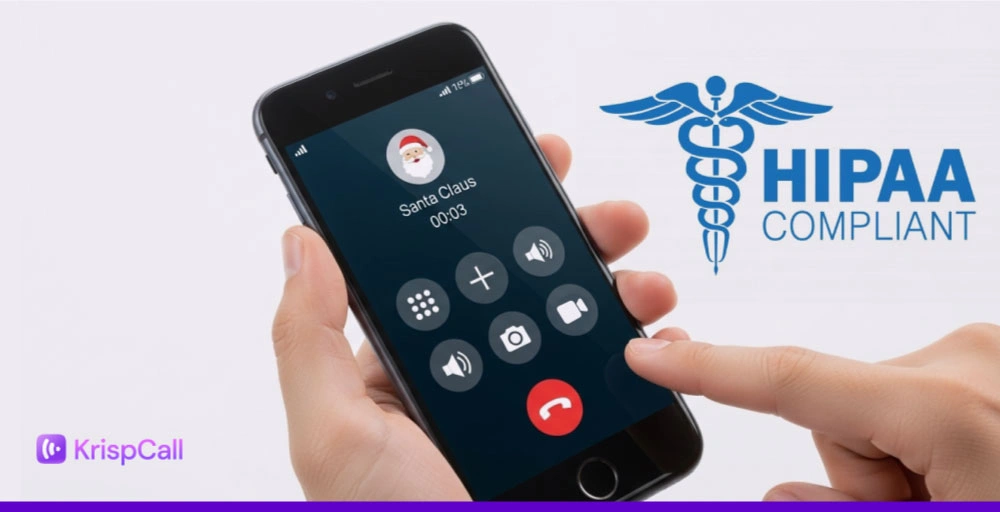
Patient health information (PHI) protection is a top priority for any healthcare organization and medical practice, and it’s also the law under HIPAA. As more clinics, hospitals, and healthcare providers covered entities switch to cloud-based phone systems like VoIP, keeping communications secure is more important than ever.
A HIPAA-compliant VoIP service helps ensure private details stay protected while keeping your team connected.
In this blog, we’ll explain what HIPAA-compliant VoIP is, why it matters, and how to choose the right provider.
What is a HIPAA-compliant VoIP system?
A HIPAA-compliant VoIP phone system is a cloud-based phone service designed to keep private health information safe while adhering to strict security standards.
It meets HIPAA safeguards, strict security rules set by the Health Insurance Portability and Accountability Act (HIPAA) to protect information like call recordings, voicemail transcription, voice messages, and any other electronic form of communication that may include patient data.
HIPAA compliance uses encryption technologies, access controls, and transport layer security to protect healthcare operations from a data breach. Any company that communicates about patients’ health details, especially electronically, needs to make sure its phone system is HIPAA-compliant.
Companies that typically need HIPAA-compliant phone systems include:
- Doctors’ offices and clinics
- Hospitals and pharmacies
- Human service offices
- Medical billing companies
- Health insurance providers
- Law firms handling healthcare data
- Healthcare software platforms
- IT support or managed service providers
What are the requirements for HIPAA-compliant VoIP?
A VoIP phone system used in healthcare must meet specific requirements outlined in HIPAA’s Privacy Rule and Security Rule. These rules ensure that patient information remains secure while still being accessible to providers for delivering care.
The Privacy Rule
The HIPAA Privacy Rule establishes a national standard for how protected health information (PHI) can be used and shared. It ensures that patients maintain control over their data while allowing providers to access the information required to deliver treatment.
For VoIP systems, this means that any communication, whether through caller ID logs, voicemails, or SMS must be carefully managed to avoid unauthorized disclosure of PHI. The Privacy Rule strikes a balance between protecting patient confidentiality and supporting efficient healthcare operations.
Security Rule
The HIPAA Security Rule focuses specifically on electronic protected health information (ePHI) and requires healthcare organizations to implement technical and administrative safeguards. For VoIP services, this includes:
- Data Encryption: Calls, voicemails, messages, and faxes containing PHI must be encrypted with protocols like TLS or VPNs to prevent interception.
- Access Controls: Only authorized users should access PHI, with unique IDs, role-based permissions, and multi-factor authentication for added protection.
- Audit Trails: VoIP platforms must keep detailed logs of all communications involving PHI, including timestamps, user activity, and call records, to monitor and investigate potential breaches.
- Disaster Recovery & Backups: Providers must have contingency plans, including secure backups and quick recovery options, to ensure availability of ePHI during system failures or emergencies.
These safeguards ensure that patient data remains secure across all communication channels offered by modern VoIP systems, including unified messaging, video calls, and voicemail transcription.
The Business Associate Agreement
Even if a VoIP service has the right safeguards in place, it is not HIPAA-compliant without a Business Associate Agreement. A BAA is a legal contract between the VoIP provider (the Business Associate) and the healthcare organization (the Covered Entity).
The agreement confirms that the provider takes responsibility for complying with HIPAA regulations and outlines key obligations, such as:
- Defining what PHI can be accessed and under what conditions.
- Using appropriate safeguards, including up-to-date encryption and breach reporting.
- Ensuring subcontractors who handle PHI also sign a BAA.
- Returning or destroying PHI when the contract ends.
- Allowing the Covered Entity to terminate the agreement if HIPAA rules are violated.
Without a signed BAA, a VoIP phone system cannot legally be considered HIPAA-compliant, no matter how secure the technology is.
4 Best HIPAA-compliant VoIP providers
To help you find the best fit, here’s a closer look at three top HIPAA-compliant VoIP providers that combine robust security measures with tools to streamline communication and support patient care. Each option offers unique VoIP features, including secure messaging, designed to keep patient information safe while supporting efficient communication.
1. KrispCall
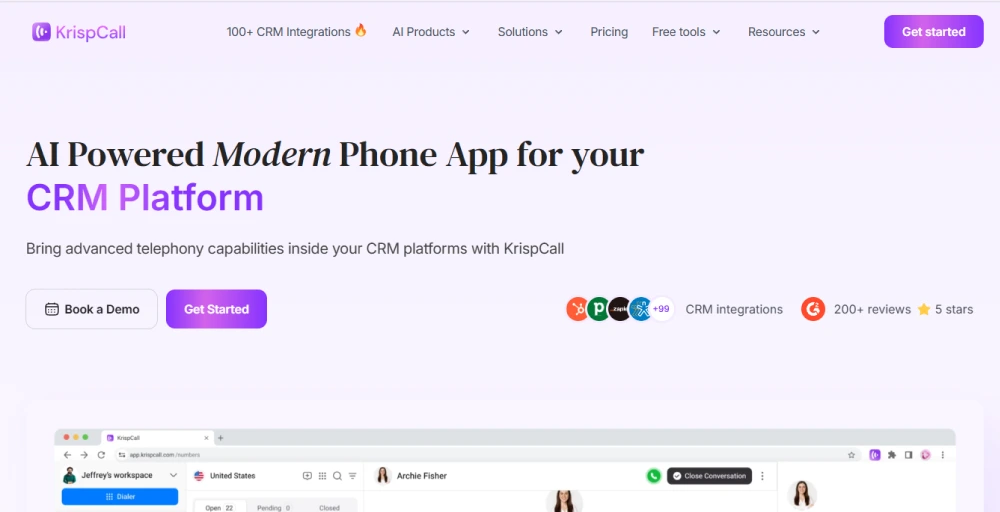
KrispCall is a flexible VoIP phone service that healthcare providers can use safely under HIPAA. It takes patient data protection seriously, using features like user authentication, account-based authentication, and strong encryption with transport layer security (TLS) and VPN to keep interactions secure.
For healthcare professional teams or non-profit organizations, KrispCall also offers detailed call logs and metadata tracking, which makes it easier to monitor activity without risking a privacy breach. Like other HIPAA-compliant providers, KrispCall will sign a Business Associate Agreement (BAA) to ensure that both the service and the healthcare organization meet regulatory requirements.
While its main appeal is simplicity and secure interaction, KrispCall’s PBX system can fit into different healthcare settings, giving teams a reliable way to connect with patients and staff without compromising sensitive information.
Features
- Unified Callbox
- Global Calling
- Text Messages (SMS)
- Voicemail
- Call routing
- Call on Hold
Pricing
- Essential plan: $15 /user/month
- Standard plan: $40 /user/month
- Enterprise plan: Contact sales
2. Emitrr
Emitrr is a HIPAA-compliant VoIP platform built for healthcare providers looking to simplify patient communication while protecting sensitive health information. It combines cloud-based calling, business texting, AI automation, appointment scheduling, and digital faxing in one secure platform, making it a great fit for practices of all sizes.
Designed specifically for healthcare organizations, Emitrr helps reduce missed calls, automate repetitive front-desk tasks, and improve the overall patient experience. Its AI Voice Agent can answer calls, schedule or reschedule appointments, route patients to the right department, and handle common inquiries 24/7, allowing staff to focus on delivering quality care.
Beyond secure calling, Emitrr offers intelligent call routing, HIPAA-compliant texting, voicemail transcription, analytics, and seamless CRM/EHR integrations. It also signs a Business Associate Agreement (BAA), giving healthcare organizations the compliance and security they need while streamlining everyday communication.
Features
- AI Voice Agent for 24/7 call answering, appointment booking, and intelligent call routing
- HIPAA-compliant VoIP with BAA, secure business texting, and digital faxing
- IVR, auto-attendant, call queues, voicemail transcription, and call recording
- Appointment reminders, missed-call text back, and automated patient follow-ups
- CRM/EHR integrations, analytics dashboard, and multi-location support
Pricing
- Standard: $25/user/month
- Pro: $35/user/month
3. Nextiva
Nextiva is a solid choice for healthcare providers who need a HIPAA-compliant phone system. To help protect sensitive patient information, Nextiva turns off certain features like voicemail-to-email, visual voicemail, and app-based voicemail access, requiring written authorization for any exception. It means your data stays more secure, even if it limits a bit of convenience.
Nextiva also agrees to sign a Business Associate Agreement (BAA), which is a must for HIPAA compliance, adhering to breach notification rules, and supports toll-free numbers for healthcare providers.
While some VoIP functionality features are restricted to keep things safe, Nextiva still offers a reliable, easy-to-use VoIP solution that healthcare businesses, medical practices, and medical organizations can count on to streamline communication and support quality patient care.
Features
- Inbound & outbound voice
- Business SMS
- Video meetings
- Screenshare & file share
- Call routing
- Team chat & collaboration
Pricing
- Core plan: $15 /user/month
- Engage plan: $25 /user/month
- Power suite CX plan: $75 /user/month
4. RingCentral
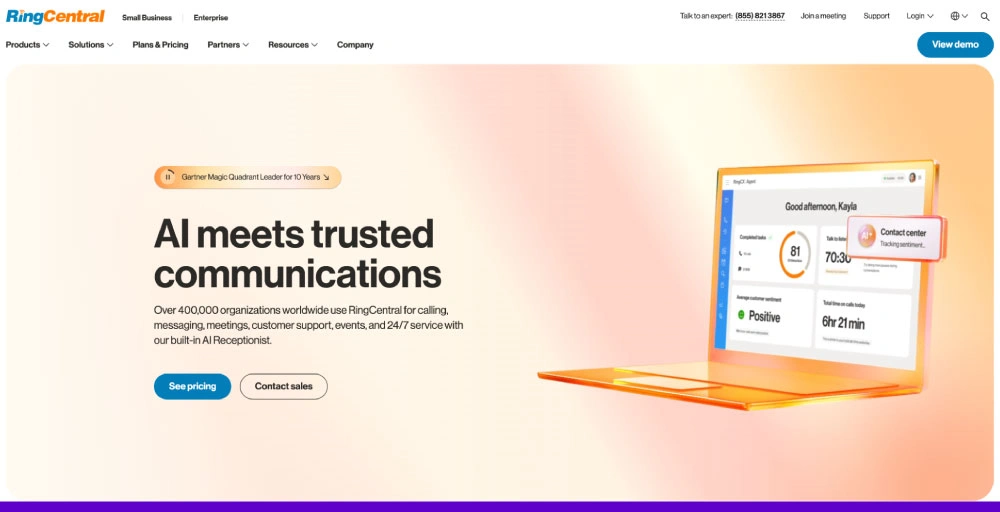
RingCentral is another strong option for healthcare organizations looking for a HIPAA-compliant phone number and UCaaS (Unified Communications as a Service) platform. It provides phone, video, and messaging tools in one place, which makes it easier to stay connected with both staff and patients.
Once a BAA is signed, healthcare providers can confidently use its services under HIPAA guidelines.
RingCentral also supports patient engagement features like SMS reminders for appointments and secure faxing through its APIs. For practices that want to offer remote care, its video meeting platform allows providers to see patients virtually and even record sessions.
This makes RingCentral an excellent choice for healthcare communication that balances convenience with robust security measures.
Features
- Unlimited domestic calling
- Business SMS and MMS
- AI Receptionist for 24/7 call answering
- AI Assistant for call transcriptions and captions
- Call menu (IVR)
- HD video meetings (100 participants)
Pricing
- Core plan: $20 /user/month
- Advanced plan: $25 /user/month
- Ultra plan: $35 /user/month
How can you tell if a VoIP provider is HIPAA compliant?
If your healthcare organization is thinking about using VoIP for phone calls, you can’t just assume the provider is a HIPAA-compliant service. Protecting patients’ personal health information is required under the Health Insurance Portability and Accountability Act, and ensuring HIPAA compliance is not optional.
While there are many VoIP services available, not all of them are equipped to handle PHI or maintain HIPAA privacy.
- They’re willing to sign a BAA: A HIPAA-compliant VoIP provider will have no problem signing a Business Associate Agreement. If they refuse, it’s a clear sign they’re not prepared for handling electronic protected health information (PHI).
- Data storage is secure and in the right place: VoIP providers should use secure data centers with strong physical protections and clear access controls. For U.S.-based organizations, it’s best when the data stays in the U.S.
- They encrypt everything: Your voicemail, call recording compliance, video consultations, and call logs should be locked down with strong encryption. That means data is protected both while it’s traveling over the network and while it’s stored.
- Access is tightly controlled: Look for features like multi-factor authentication and role-based permissions. Only the right people should be able to access sensitive information.
- Activity is trackable: A compliant provider gives you tools to see who accessed what and when. Real-time audit logs, activity reports, call center KPIs, and ACD performance metrics help you stay on top of security and performance.
- Their team is trained: It’s not just about technology; staff should know HIPAA rules and follow strict data-handling policies.
- They have a clear breach plan: If something goes wrong, you need to know how and when you’ll be notified. A solid provider has a documented response plan and tests it regularly.
Their partners follow the rules too: If they rely on any third-party services, those vendors must also comply with HIPAA and sign BAAs.