

Switching phone service providers used to mean giving up your existing number, but not anymore. You no longer have to compromise on call quality just because your existing provider does not support advanced features.
With VoIP number porting, you can easily switch service providers without sacrificing the number your customers already know. This means you don’t need to reprint business cards, update directories, or notify every client.
In this blog, we will discuss what VoIP number porting means, why businesses port numbers to VoIP, how VoIP porting works, along with porting requirements, challenges, and things to consider while choosing the right provider.
✨ Key Takeaways
- VoIP number porting is a convenient way to keep your existing number while efficiently switching the provider to stay competitive and take advantage of better features and pricing.
- Businesses usually port numbers to save cost, maintain brand recognition, integrate with advanced features, and avoid system downtime.
- Porting involves making a porting request from the old provider and providing all the necessary account details of the existing numbers to the new provider.
What is VoIP number porting?
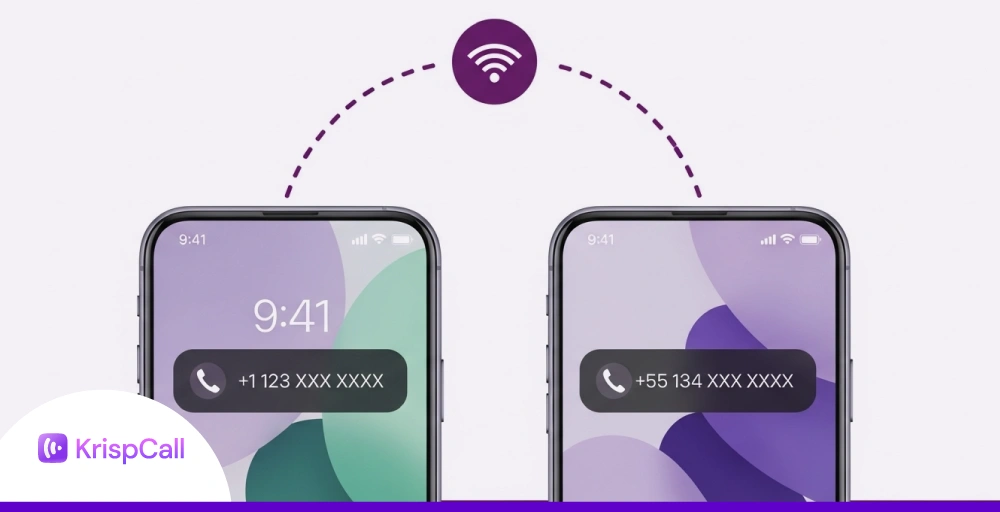
VoIP number porting is the process of transferring an existing VoIP phone number or traditional POTS number to a new VoIP service provider. This process helps you retain your number even after you switch to a new provider. This way, you do not have to worry about data loss or updating contact information with clients and contacts individually.
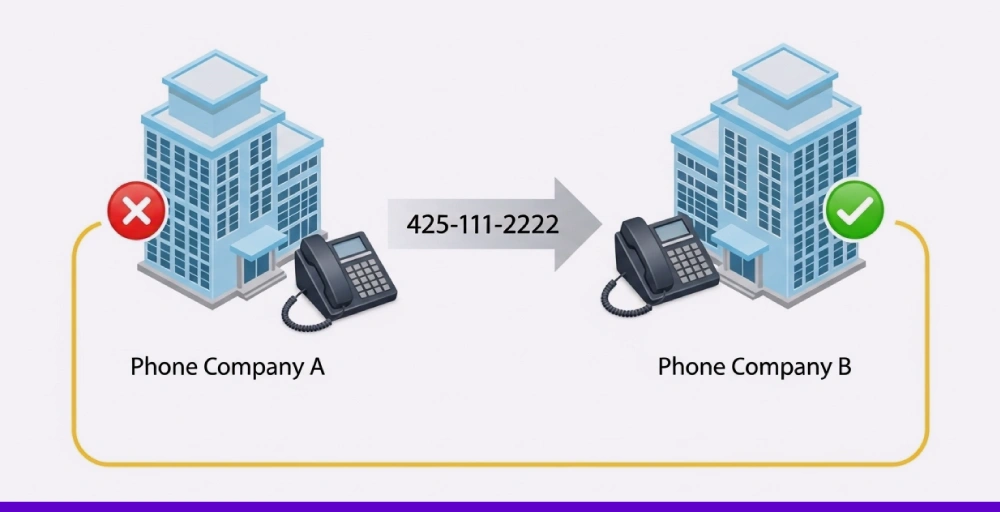
The FCC (Federal Communications Commission) sets the regulations for number porting in the U.S., but the process itself is handled between your old and new service providers. To port a phone number to VoIP, simply contact your new provider, and they will work with your current provider to complete the transfer, as required by FCC rules.
The porting is also affected by the rate center, which is a geographical area used in the telecommunications industry to determine the local calling and billing boundaries. As long as you stay within the boundary, your new provider can port your existing number to their service.
Why do businesses port numbers to VoIP?
Many businesses port their numbers to VoIP (Voice over Internet Protocol) to save money, maintain brand recognition, and gain greater flexibility. VoIP offers cost-effective solutions for calls, especially international and long-distance ones, while allowing businesses to retain their existing phone numbers.
Business phone numbers are ported to VoIP for the following reasons:
- Save cost: VoIP calling has a lower call rate than traditional phones, especially for long-distance calls. Porting your business number to a VoIP phone service can save on per-call costs and eliminate the need for expensive hardware and maintenance associated with it.
- Maintaining brand recognition: Your phone number represents your bank, and changing numbers multiple times may create confusion. So instead, you can port your number to switch the provider to keep your number consistent across multiple channels.
- Flexibility and scalability: Number porting allows you flexibility in using the same number throughout your business, and especially, VoIP number porting ensures that your phone number can scale up with your business needs.
- Integration and advanced features: VoIP offers many advanced features that are not typically available in traditional phone systems, like call forwarding, voicemail-to-email, call recording, and integrations with third-party CRM systems.
- Avoiding downtime and missed interaction: Number porting maintains a smooth transfer of a phone number to a VoIP system and provides a smooth transition while maintaining operational efficiency.
How does VoIP number porting work?
VoIP (Voice over Internet Protocol) number porting is the process of transferring your phone number from one VoIP provider to another or from a traditional phone company (PSTN) to a VoIP provider.
Here is how voip phone number porting works:
1. Check portability
First of all, you need to check the number portability. The VoIP number portability usually depends on geographical areas and the number type. For example, some geographic numbers may not be portable across all VoIP providers. You need to verify that your current number can be transferred to your new VoIP provider.
Some providers might place restrictions on porting based on the type of number (e.g., toll-free, mobile, or landline).
2. Initiate the porting process
You need to choose the VoIP provider you want to switch to. Once you’re set, contact the new provider to start the porting process. For this, you’ll be asked to provide a few details, including your current phone number, account information, and PIN (if any).
Make sure to provide the exact name and address associated with your current account to avoid discrepancies.
The new provider then submits a porting request to your old provider. This request includes your account information and the specific number you’re trying to port.
3. Authorization and verification
The old provider may require you to authorize the virtual phone number porting by confirming some details. You may need to provide a signed letter of authorization (LOA) for the transfer to proceed. The provider may also require Verification of ownership.
4. Porting confirmation
The porting process can take 2 – 4 weeks, depending on the providers involved and the type of number, i.e., landline or mobile number. VoIP ports are simpler than the traditional landline porting process.
During the porting process, there may be a short period where your phone service is temporarily unavailable. This usually lasts a few minutes to a few hours.
5. Completion of porting
Once porting is complete, your number will be active with your new VoIP provider. You can now use all the services they offer. It’s a good idea to test your number to make sure everything is working correctly (calls, voicemail, etc.).
6. Cancel the old Service
Once the porting process is complete, your old service will automatically be canceled, but it’s still a good idea to contact them to confirm your account is closed. And before cancelling, make sure to ask about any cancellation fees or outstanding balances.
👉 The above steps show how a porting number works but you also need to consider other things like:
Don’t cancel your current service until the porting process is complete, as doing so prematurely can cause the transfer to fail. If everything goes smoothly, you’ll retain your old number and any associated features such as voicemail or call forwarding.
In some cases, VoIP providers may charge a porting fee (VoIP costs), while others might offer it for free as part of a promotion.
How to port your VoIP number to KrispCall?
Even if you are trying to port your traditional SIM or your existing VoIP number from another carrier, you can get your number ported and use the services you like by changing providers but keeping your existing number. After the completion of the porting process, you can use your existing number as part of KrispCall.
I. For existing users
Existing users can request porting using the KrispCall web app.
- Sign in to KrispCall.
- Go to settings > VoIP numbers. Then click “port existing.”
- Enter the number you want to port and its current provider, and then click “request”.
Once your porting request is received, KrispCall checks the geographical location of the request. And if porting is possible, our team asks for proof of your ownership according to the country and number type you want to port.
II. For a new user
For new users, you need to follow these steps:
- Go to the phone number porting section and check the number eligibility.
- Enter the number with the country code.
- Select the number type and click on check porting.
If porting is available, you will receive the green alert, and then you can enter a valid email and submit the request.
Number porting usually takes 2 to 4 weeks, depending on the type of number. This time may vary depending on the kind of number and your geographical region. Upon approval, you will be notified by email of the scheduled porting date.
After that, the KrispCall account will show your phone number, but make sure to keep your number active until the porting process completes. And your number can be operational after the porting date passes.
VoIP number porting requirements
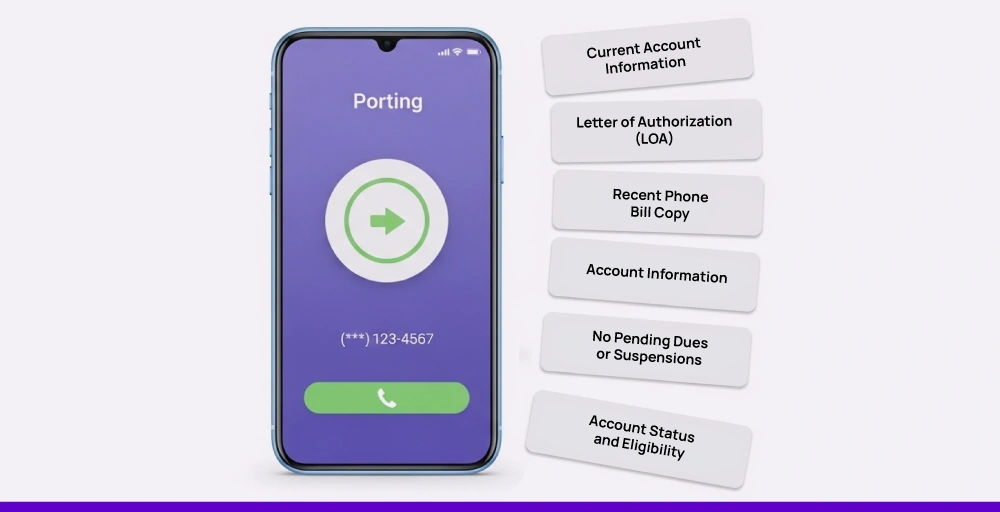
To initiate VoIP phone number porting, you need to provide a couple of documents to your new provider.
1. Current account information
You need to provide your new provider with all the necessary details of your old provider to proceed with the porting. These details must match exactly with what your old provider has on file. These documents include:
- Account holder’s full name: The name must be the same as what’s listed in your provider’s system.
- Account number: This is a unique number assigned to your VoIP account. It helps the new provider locate and verify your number.
- Service address (if applicable): Some providers may also require the address linked to the VoIP service. Even if VoIP is virtual, a billing or service address may still be tied to the account.
🔥 Note: Even small mismatches in the information and documentation can delay or reject the porting request.
2. Letter of Authorization (LOA)
LOA, or letter of authorization, is a letter that allows your new provider to request the VoIP number transfer. You need to sign these documents to confirm that you are the rightful owner and that you approve the porting process. Without a valid LOA, the porting process cannot begin.
3. Recent phone bill copy
A copy of your latest phone bill (usually from the last 30-60 days) is required to show the existence of your phone number, billing address, and your name. This helps the new provider confirm that the number belongs to you and is active. This serves as proof of ownership and account status.
4. No pending dues or suspensions
Before initiating a porting request, make sure all your bills are cleared and your number is not suspended or deactivated. The numbers with pending dues and service issues can not be transferred.
5. Account status and eligibility
Your account number must be active and eligible for porting. Some VoIP providers may have rules or restrictions, so it’s important to check:
- Whether your current number can be ported.
- If there are any lock-in periods or contract obligations.
Challenges of VoIP number porting
VoIP number porting can face multiple challenges, like inaccurate information, potential delays, contractual obligations, or geographical restrictions. Let’s understand them in detail:
Verification issues and incorrect information
Most of the time, issues like mismatched details, incorrect pins, inactive/overdue accounts, and manual user error can potentially delay the porting process.
- Mismatching details: Inaccurate information like account numbers, billing addresses, or service addresses) between the current and new providers can disturb the process.
- Incorrect pins: Entering an inaccurate PIN (Personal Identification Numbers) can also cause rejection in the porting process.
- Inactive/overdue accounts: The numbers with overdues and inactive accounts can delay or block the porting process.
- Manual user error: Manual user mistakes while providing the information to the new provider can also cause delays or failures.
Contractual and financial obligations
Contractual obligations and remaining outdoors can be a major challenge while handling number porting:
- Contractual obligations: Some providers may have certain contracts or penalties related to number porting at the time of VoIP number purchase; such issues need to be addressed.
- Outstanding balances: Unpaid bills may hold the number released from the older provider.
Technical and geographic considerations
While porting the number, geographic locations, and technical issues can also be a major challenge:
- Limited portability: Although most of the numbers can easily be ported, some numbers, like new connections or some business lines, may not allow number porting.
- Geographic restrictions: Not all VoIP providers offer porting service in all areas. This may limit the porting capabilities.
- Regulatory compliance: VoIP providers need to follow regulations and documentation requirements for porting, which can sometimes add complexity.
Other potential issues
With all the issues mentioned above, some other challenges need to be addressed.
- Disputes with current provider: Ongoing disagreement with the current provider may be a challenge while initiating a number porting.
- Forgotten additional numbers: If the user has additional numbers associated with their account, all of these need to be addressed during the porting process.
- Security standards: Some online services may not allow a VoIP number due to security concerns.
Choosing the right VoIP provider for porting
Selecting the right VoIP provider for porting involves considerations like call quality, features, pricing, customer support, and the provider’s scalability as well as reliability. It is important to know well about your business needs with information like call volume and integration requirements in detail before making the decision:
- Call quality and reliability: Look for providers with a strong track record of clear calls and consistent uptime. Check their R-factor (a measure of call quality) and customer reviews.
- Features: Check if the features offered by multiple providers align well with your business needs. Consider features like call forwarding, voicemail, shared phone numbers, CRM integration, and video conferencing.
- Pricing and plans: Compare the pricing plans with all the providers and try to look for a pay-as-you-go model for efficient cost.
- Customer support: make sure your provider provides 24/7 customer support across multiple channels (phone, email, chat) and availability.
- Scalability: Choose a provider that can adapt to your business’s growth and changing needs.
- Integration: If you rely on CRM systems, make sure your provider offers CRM integrations.
- Security: Look for the security features and ask them about the security standards they follow before transferring.
- Compatibility: Make sure your current provider is compatible with your existing infrastructure.
- Number porting: Check the provider’s porting process and document requirements to maintain the transition of your existing numbers.
Porting a VoIP phone number made easy with KrispCall
Number porting may seem to be a complicated process at first, but with the right guidance, it is way easier. With KrispCall’s user-friendly platform and dedicated support, porting your VoIP number becomes easier. If you’re looking for enhanced call quality, additional features, or cost-saving opportunities, KrispCall can be the right choice.
Switching to a new provider like KrispCall without losing your number – Schedule a free demo and see how easy the transition can be.
And in case you have any queries or need help with the number porting request, feel free to contact our support team. Email: porting@staging.krispcall.com | support@staging.krispcall.com