

If you are still using traditional phone systems, you are holding your business back. It’s very inefficient and costs you a huge amount to set up, and also limits your growth in the long-run call center operations. That’s the main reason most companies are now switching to digital telephony.
Digital telephony replaces traditional phone lines with internet-based calling, offering businesses a faster, more flexible, and more affordable way to engage with customers.
In this blog, you will learn about the definitions of digital telephony, its benefits, and signs to upgrade to modern digital telephony.
✨ Key Takeaways
- Digital telephony lets you make phone calls through an internet connection instead of traditional phone lines.
- The digital telephone offers benefits such as cost-effectiveness, advanced features, increased flexibility, and scalability.
- Switch to digital telephony if you experience poor call quality, limited scalability, or a lack of advanced features.
What is digital telephony?
Digital telephony is a modern communication technology that allows making and receiving phone calls using an internet connection or on a digital network. It converts voice into digital signals, which are transmitted using various methods such as data packets over the internet, through mobile networks (like 4G/5G), or private digital infrastructures. Digital telephony improves efficiency, clarity, and integration with modern communication tools.
Components of digital telephony system
Understanding how digital telephony works is essential for smooth operation. Here are some components explained below:
1. VoIP server
The VoIP server works as the brain of the digital telephony system. It controls how calls are made, received, and routed. Whenever you dial a number, the VoIP server takes charge and connects you to the right person using internet-based communication instead of traditional phone lines.
2. IP phones/ softphones
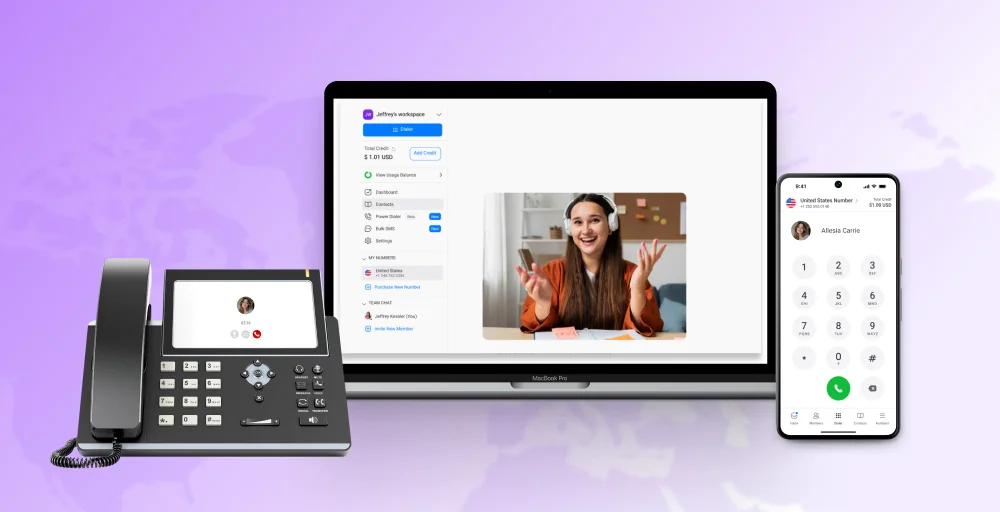
IP phones and softphones are the tools you use to make calls in a digital phone system. IP phones look like regular office phones but connect through the internet. Softphones are apps you install on a computer or smartphone, allowing you to call using just your device and an internet connection.
3. Private branch exchange
A PBX is like a private phone network used within a company. It manages internal calls between team members and connects them to external numbers. Many modern businesses, both for-profit and non-profit, rely on cloud-based PBX systems, eliminating the need for physical phone equipment in the office.
4. Internet connection
A digital phone system relies on a stable internet connection to work properly. Instead of using phone cables, it sends voice data over the internet. The better your internet speed and reliability, the clearer and smoother your calls will be.
Is a digital telephone suitable for your business?
Deciding between a traditional phone system and digital telephony requires a clear understanding of how each option impacts your call center operations. By exploring the benefits and limitations of digital telephony, you can determine whether it’s the right step forward for your business.
| Pros | Cons |
| Lower call and setup costs | Dependent on the internet connection quality |
| Easy to scale up or down | Potential security risks if not secured |
| Remote access via apps/devices | May require training for some employees |
| Provides Rich features (IVR, analytics, etc.) | Possible latency with low-bandwidth plans |
| Offers CRM & tool integrations | Monthly subscription fees (SaaS model) |
| Provides better customer experiences | Downtime risk during network outages |
Some of the benefits of a digital telephone system are described below:
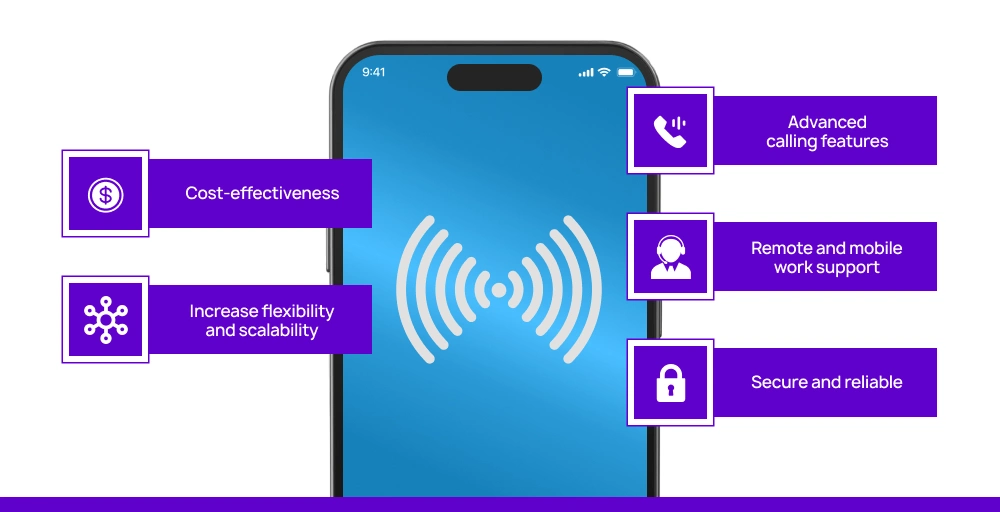
1. Cost-effectiveness
A digital telephone system reduces costs because it doesn’t need any hardware installation or maintenance. You can easily make international business calls at a budget-friendly rate. With predictable monthly pricing and no hidden fees, it’s more affordable.
2. Advanced calling features
A digital phone system offers more advanced features to handle calls efficiently. You can access features like voicemail to email, call routing, auto attendant, real-time analytics, and seamless CRM integration in one single platform. These features enable you to operate an omnichannel contact center with efficiency.
3. Increase flexibility and scalability
Whether you are running a startup or an enterprise with global teams, digital telephony scales with you; you can easily and instantly add or remove users, set up virtual numbers in multiple countries, and adapt your system in minutes. You don’t have to face disruptions, just smooth growth.
4. Remote and mobile work support
Digital telephony enables team members to make and receive business calls from anywhere on their devices, such as laptops, smartphones, or tablets. It is ideal for hybrid offices, remote teams, and on-the-go professionals.
5. Secure and reliable
With end-to-end encryption, access controls, and cloud backups, digital telephony keeps your communications secure and compliant. Plus, with 99.99% uptime and crystal-clear voice quality, you can rely on it to perform.
Real-world use cases of digital telephony
Digital telephony systems are used in various industries to improve patient healthcare and streamline factory processes.
Here are some examples of how it is used that make an impact in the real world.
1. Telemedicine in healthcare
Digital telephony is transforming healthcare by making expert care just a call away. Instead of waiting days for an appointment or traveling long distances, patients can speak to doctors instantly through secure voice or video calls. It’s a game-changer for rural communities, elderly patients, and anyone needing quick medical advice, like saving time, reducing hospital visits, and bringing healthcare into the comfort of home.
2. Smart factories in manufacturing
In smart factories, digital telephony keeps operations sharp and efficient. Engineers, supervisors, and machine operators stay in constant touch through internet-based calls and communication tools. Whether it’s flagging a production issue or syncing up across apartments, every second counts, and digital telephony helps teams respond in real time, cut downtime, and keep the factory floor running like clockwork.
Signs you need to upgrade to digital telephony’
Suppose you are using an outdated analog phone system and facing issues like unstable call quality and a lack of modern features. It’s time to upgrade to a digital telephony solution to support your business growth.
Here are some signs that indicate it’s time to switch to digital telephony.
- Poor call quality: If you are experiencing phone drops, static noise, or delayed voice, these issues might frustrate customers and can lead to lower communication efficiency.
- Limited scalability: Acquiring new team members or expanding a branch in a traditional phone system requires expensive hardware, complex wiring, or installation fees.
- Lack of modern features: An analog phone system lacks advanced features such as CRM integration, auto-attendant, and call analytics, hindering businesses from competing in a dynamic environment.
- Security or compliance concerns: A traditional phone system offers limited security, lacking encryption and access control, making it highly vulnerable to data breaches of customers.
How to select the right digital telephony system?
Selecting the right digital telephony system makes it easier for businesses to achieve their goals faster and efficiently. There are several things to consider that companies need to understand before choosing digital telephony.
1. Evaluate your business need
First, you need to understand the purpose of the digital telephony system, whether it is for handling high call volumes, enabling remote work, improving customer support, or integrating tools like a CRM system. Identifying goals helps to run the operation smoothly and effectively.
2. Set a budget
It is important to set a budget you’re comfortable with for your operational costs. Include estimates for things like hardware setup, monthly subscription fees, and additional charges. Having an estimate helps you pick the digital option that offers the best value for your money.
3. Check for key features and integrations
Check the essential features, such as call routing, voicemail, IVR, call recording, and analytics. Ensure that the system supports your existing software, like helpdesk, CRM integrations, or collaboration tools, to streamline workflow.
4. Check security and compliance
If you handle sensitive customer data, it is crucial to have strong security and compliance with GDPR. Select the system that offers encryption and secure data storage, ensuring that sensitive data and information are protected.
5. Check customer support availability
Reliable support is crucial for managing technical problems. Choose a provider that offers round-the-clock assistance via various channels such as chat, email, or phone, and has a strong reputation for quick issue resolution.
Level up your business calls with a digital telephony system
If you are still relying on a traditional phone system to run your business, it might be time for a change. With KrispCall, making and receiving business calls becomes simpler, smarter, and a whole lot more flexible.
Whether you are working from your office, your living room, or halfway across the world, KrispCall keeps your telephony conversation seamless and professional.
What makes KrispCall different is how effortlessly it fits into your workflow. It runs entirely in the cloud, so there’s no need for desk phones or complicated setups. You can get virtual numbers from over 100 countries, access all your calls, messages, and voicemails in one unified dashboard, and even share numbers with teammates, all from your computer or smartphone.
Try KrispCall today and experience the future of business calling, no hardware, no hassle.