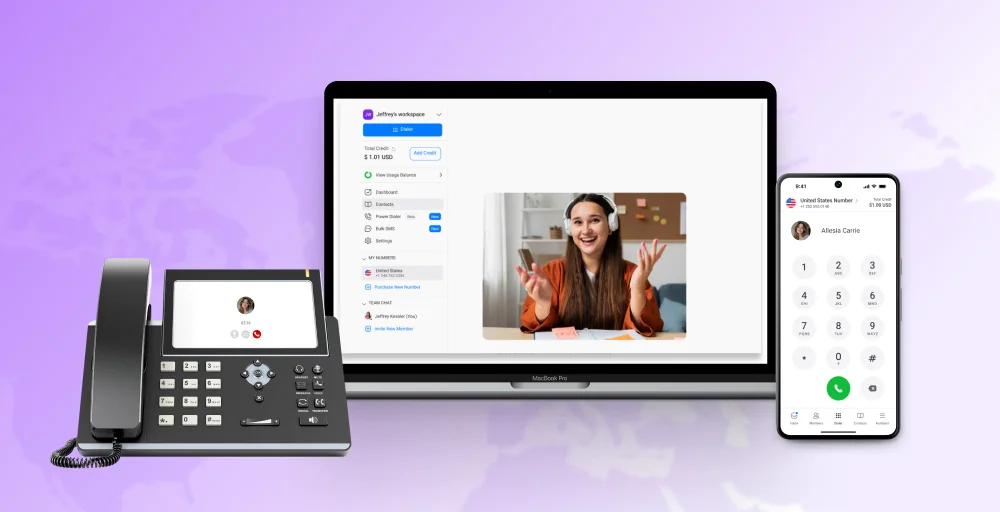


Hosted phone systems are changing the way small businesses stay connected, offering flexibility without the need for bulky hardware. But not all systems are created equal.
So, before you select a hosted phone system from an exceptional service provider for your business, know what it is, how it works, its features, and tips to ensure it fits your team’s needs and growth.
Let’s break it down.
✨ Key Takeaways
- The hosted phone system, or hosted PBX, is a business phone system managed by a third-party provider through the cloud.
- It works by routing phone calls over the internet instead of traditional phone lines or on-site hardware.
- Key features include call forwarding, IVR, call recording, messaging, and system integrations.
- Benefits include lower costs, improved flexibility, easy scalability, and better security.
What is a hosted phone system?
A hosted phone system is a business telephone system that runs through an Internet connection and is managed by a third-party provider off-site in the cloud.
It is also known as a cloud PBX or cloud phone system. They’re a cost-effective way to get better business communication with features like smart call routing, simultaneous ring, SIP (Session Initiation Protocol) trunking, app integration, and video conferencing.
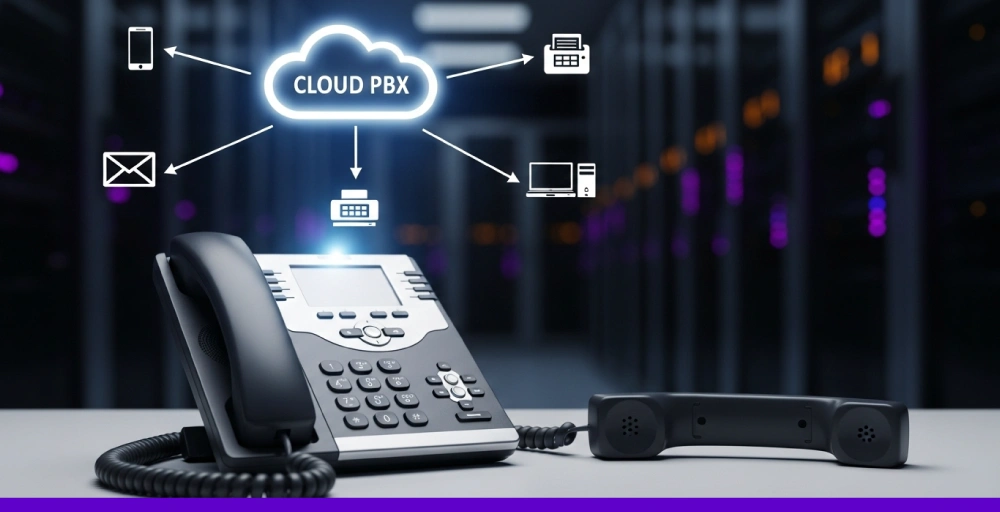
Compared to legacy or conventional PBX systems, which require expensive on-site hardware, complex wiring, and ongoing IT maintenance, a hosted VoIP system is much simpler to set up and manage. You don’t need a server room, a physical PBX box, or a dedicated telecom staff. Instead, your VoIP provider handles system updates, call routing, and feature upgrades from the cloud phone system, freeing up your team and reducing operational costs.
Note: Terms like VoIP, cloud PBX, virtual PBX, UCaaS, hosted phones, and IP-PBX are often mixed up, but each one refers to a different system or setup.
How do hosted phone systems work?
Unlike traditional landline systems that rely on physical copper wires, hosted phone systems operate entirely over the internet using VoIP (Voice over Internet Protocol) technology. This enables businesses to make and receive calls from anywhere, as long as there’s a stable internet connection.
Here’s a step-by-step look at how it works:
- Incoming Call Routed to the Cloud PBX
When someone calls your business number, the call is first directed to your hosted PBX provider in the cloud. - Voice Converted to Digital Data
The provider converts your voice signal into small digital data packets, making it easy to send over the internet. - Packets Travel Over the Internet
These data packets travel through your internet connection and are efficiently routed to your device, whether it’s a desktop phone, smartphone, or softphone app. - Reassembly into Clear Audio
Once the packets reach your device, they’re reassembled and converted back into crisp, clear audio, letting you hear the caller as if it were a traditional phone call.
All of this happens in milliseconds, ensuring a seamless experience for both the caller and the receiver.
Because hosted phone systems run on VoIP, they offer scalability, easy integration with business tools, and simplified management—all without the need for complex on-site hardware or infrastructure.
Hosted vs. On-premise vs. Hybrid: What’s the difference?
Understanding the differences between hosted, on-premise, and hybrid phone systems is essential for selecting the best option that meets your unique business needs.
| System Type | Description | Best For | Pros | Cons |
| Hosted | Cloud-based system managed by a provider; no on-site hardware required. | Startups, small teams, and remote work. | Companies are undergoing a cloud transition or operating multiple sites. | Needs strong internet, limited hardware control. |
| On-Premise | Traditional PBX with hardware at your location. | Large enterprises with an in-house IT team. | Full control, no internet needed for internal calls. | High upfront cost, ongoing maintenance, and less flexibility. |
| Hybrid | Combines cloud and on-premise elements. | Companies undergoing a cloud transition or operating multiple sites. | Flexible, reliable, blends old and new systems. | More complex setup, higher management costs. |
While on-premise and hybrid solutions offer certain advantages, hosted phone service is becoming the top choice for businesses. They’re easier to manage, faster to deploy, and more cost-effective without the hassle of physical equipment or on-site maintenance.
Key benefits of switching to a hosted phone system
Here are some key benefits of a cloud-based phone system that you won’t get with a traditional phone service:
1. Remote accessibility
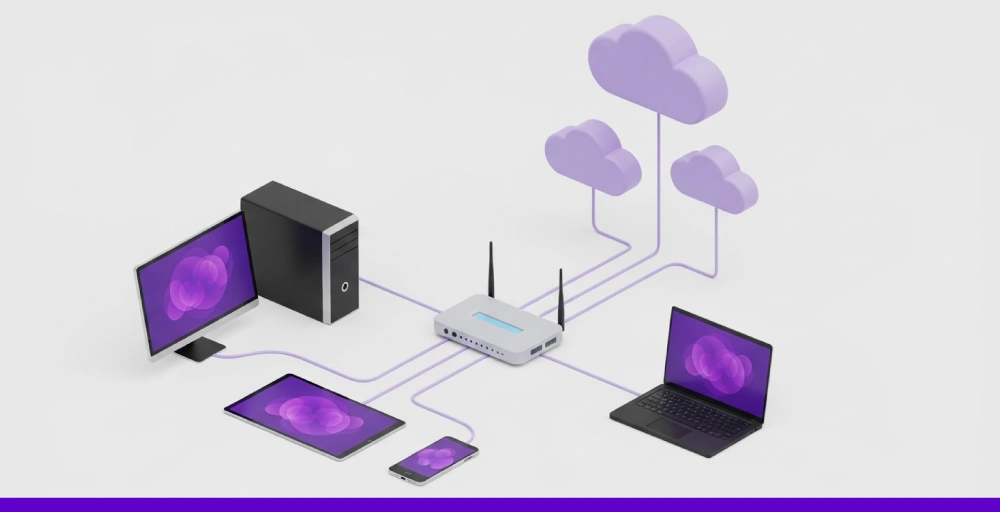
A hosted phone system lets your team make and receive calls from anywhere with a stable internet connection, using their business phone number. This is great for remote teams or for hybrid work, ensuring your business stays connected even when employees are traveling or working from different locations.
2. Easy to install and maintain
VoIP phone systems are easy to install and maintain as the provider manages all hardware, software, and updates off-site, allowing access from any mobile device. This eliminates the need for expensive on-premise equipment, complex wiring, and dedicated IT staff, freeing internal resources and reducing operational burdens for your business.
3. Cost-effective
Hosted VoIP services are more affordable than conventional ones, leading to significant cost savings. It significantly reduces upfront costs for equipment and installation. Additionally, ongoing maintenance is more cost-effective, and call rates are often lower than those of traditional phone systems.

4. Scalability
You can add or remove users, physical phone lines, or features at any time without requiring new hardware. As your business grows or changes, your phone system grows with you. This flexibility enables you to control costs and remain agile.
5. Advanced features
Cloud PBX (private branch exchange) systems offer numerous powerful features that enhance productivity and customer interaction service. These include features such as auto-attendants, voicemail transcriptions, call forwarding, call analytics, voicemail-to-email, and CRM integration, which are often unavailable or expensive with older phone systems.
The Drawbacks of a Hosted Phone System
While a hosted phone system offers flexibility, scalability, and cost savings, it’s important to understand that no solution is perfect. Like any technology, hosted systems come with a few limitations businesses should consider before making the switch.
Here are the key drawbacks to keep in mind:
1. Dependence on Internet Connectivity
A hosted phone system runs entirely over the internet. That means call quality and reliability depend heavily on your internet connection.
If your bandwidth is limited or your network experiences outages, you may encounter:
- Dropped calls
- Delays or latency
- Poor audio quality
For businesses in areas with unstable internet infrastructure, this can be a challenge. Investing in a strong, reliable internet connection is essential.
2. Potential Downtime During Internet Outages
Unlike traditional landlines that operate independently of your office internet, hosted systems can be affected by connectivity issues.
However, many providers offer failover routing that forwards calls to mobile devices during outages. While this reduces disruption, it’s still a dependency to consider.
3. Ongoing Subscription Costs
Hosted phone systems operate on a monthly subscription model. While this reduces upfront hardware expenses, it does mean recurring costs.
Over time, subscription fees can add up — especially for larger teams with advanced feature requirements. Businesses should carefully compare pricing plans and included features before committing.
4. Limited Control Over Infrastructure
With a hosted phone system, the service provider manages the infrastructure, updates, and maintenance.
While this reduces IT workload, it also means:
- You rely on the provider’s uptime
- Customization may be limited
- System upgrades are not fully in your control
Choosing a reputable provider with strong service-level agreements (SLAs) is critical.
5. Security Concerns
Although most hosted phone systems use encryption and advanced security measures, transmitting voice data over the internet does introduce potential risks.
If proper security practices aren’t followed — such as strong passwords, network firewalls, and multi-factor authentication — businesses may be vulnerable to cyber threats.
The solution is selecting a provider with enterprise-grade security and ensuring internal security policies are in place.
What to expect from a good hosted phone solution?
When choosing a hosted business phone system, it’s important to look for key features that enhance communication, support business continuity, and work effectively with your team.
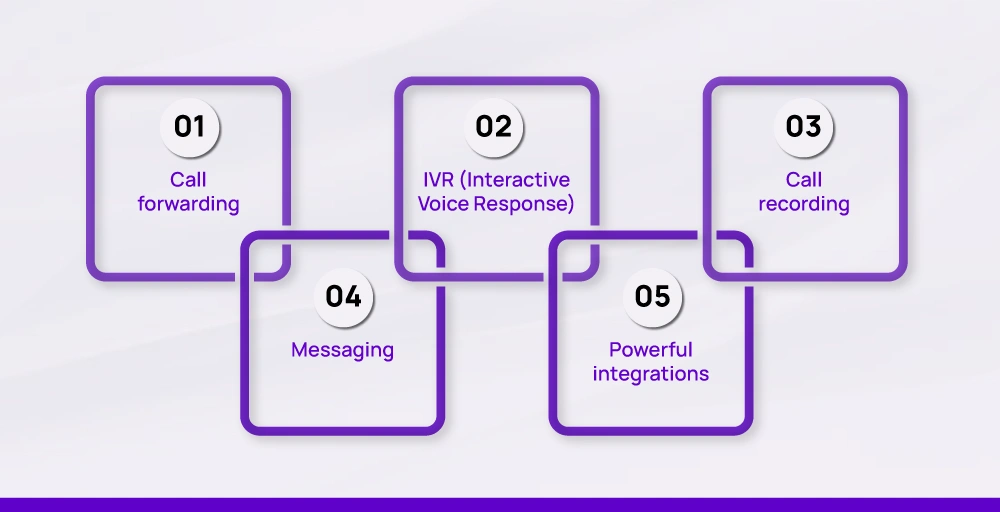
Call forwarding
Call forwarding in a hosted phone system makes sure you never miss a call. It can redirect calls to different extensions, mobile numbers, or voicemail.
To ensure even greater flexibility, features like Find Me/Follow Me ring multiple devices simultaneously using your existing internet connection, while smart routing rules help forward calls to the right person based on time, availability, or caller information.
IVR (Interactive Voice Response)
An Interactive Voice Response (IVR) system utilizes pre-recorded voice menus to enable callers to quickly select the appropriate department or individual. This helps reduce wait times and increases the likelihood that the caller receives help on the first attempt.
Call recording
Call recording isn’t just another basic feature. Instead, it’s a core feature that adds real value. Whether you’re training new team members, staying compliant with regulations, or just need to double-check details from past conversations, VoIP data centers that have the ability to record calls make a big difference.
Messaging
Most of the hosted phone systems come with built-in messaging tools that can be accessed from cell phones. You can chat with your team in real time and send SMS or MMS texts to clients using your business number. It helps you stay connected inside your team and with customers within one unified system.
Powerful integrations
A good hosted phone service connects with your other business software. It can integrate with tools you already use, such as your customer relationship management (CRM) system, chat apps, and other automation platforms. As a result, it helps you manage calls and customer info much more smoothly.
Who benefits most? Real-world use cases for hosted phone systems
Hosted business phone systems offer a unified communications solution that fits a wide range of business needs. Here are practical examples of who benefits most and how they use these systems in the real world:
1. Hosted phone systems in ecommerce
E-commerce businesses face high volumes of customer inquiries daily, from order tracking to return requests. In fact, 90% of customers expect an immediate response, with 60% considering “immediate” to mean within 10 minutes or less. A robust hosted system ensures these queries are resolved efficiently within 30 seconds, improving customer loyalty and brand reputation.
For example, Emma calls ShopSwift about a delayed order. The hosted system pulls up her latest purchase, and an agent reassures her with the shipping status, all within 30 seconds.
2. Hosted phone systems in real estate
Real estate professionals rely heavily on effective communication, whether it’s with buyers, sellers, contractors, or legal teams. Hosted systems provide the flexibility agents need to stay connected on the go.
Example: Sarah, a real estate agent, uses her hosted VoIP softphone app to answer calls while driving to a property. She shares property images through the integrated instant messaging tool without switching apps.
See how KrispCall helps real estate teams stay connected and close deal faster.
3. Hosted phone systems in healthcare
In healthcare, immediate communication is vital. Hospitals operate 24/7, handling emergencies and patient inquiries. The average hold time in U.S. healthcare call centers is about 4.4 minutes, far exceeding the 50-second benchmark set by the Healthcare Financial Management Association. A reliable hosted solution ensures seamless connectivity in these situations.
For example, in hospitals, patients scheduling appointments may ask, “What are the doctor’s visiting hours?” or “When is the next available slot?” A hosted system can automatically respond to these queries, while complex inquiries can be handled by live agents through advanced call routing instead of relying on the public switched telephone network.
4. Hosted phone system in hospitality and tourism
The hospitality and tourism sector thrives on availability, responsiveness, and international outreach. With guests booking from various time zones, constant communication is key, and that’s where hosted phone systems excel.
From front desk operations to reservation departments, virtual phone systems streamline voice quality with features like call forwarding, auto-attendants, voicemail-to-email, and call queuing. Guests can receive immediate assistance, whether it’s booking a room or inquiring about amenities.
For example, a guest from Germany calls SeaBreeze Resort to inquire about late check-in. The hosted VoIP system offers multilingual support, then forwards the call to the reservations team, all after hours.
Deliver seamless guest experiences with our hospitality contact center solutions.
5. Hosted phone systems in finance
Financial institutions prioritize secure, compliant, and smooth client communication. With 80% of organizations boosting customer experience (CX) investments and 37% of leaders focused on cost reduction in multi-channel service, hosted telephony offers a solution. They address these needs by significantly cutting costs and boosting efficiency.
Example: BrightBank uses VoIP handsets with IVR to help customers check account balances or connect to loan officers. A client presses 2 for “Loan Inquiry” and gets routed immediately, without agent assistance.
Ready to upgrade your business phone system?
There’s no question that cloud phone systems are the smarter choice for today’s businesses. The days of tangled physical wires, bulky desk phones, and constant maintenance are behind us.
With KrispCall, you get a fully cloud-based phone system packed with features that actually make work easier, call recording, IVR, analytics, virtual numbers, and more.
Just make sure your provider gives you the tools your team needs to stay efficient and connected. With KrispCall, you get it all—no extra hardware, no hidden hassle.
Plans start at just $15 per user/month. Make the switch today.