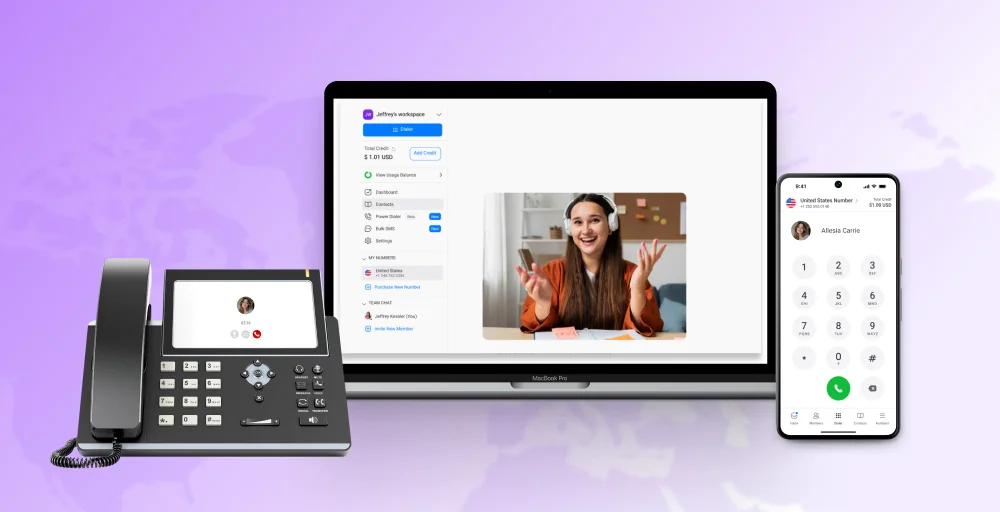


Maybe you’re upgrading your office phone system and come across SIP phones. What makes it a good option for you? It offers you advanced features with the flexibility of voice communication through the internet.
A SIP phone enables businesses to manage calls and supports hybrid work that traditional phone systems struggle to provide. It optimizes audio quality and enhances how teams connect with clients, becoming a crucial aspect of modern business communications.
Keep reading to understand everything about SIP phone, including its definition, types, benefits, and how it differs from VoIP technology.
✨ Key Takeaways
- A session initiation protocol (SIP) phone is a device that uses SIP to make and receive calls over the internet.
- Key features that make SIP phones reliable are High-definition (HD) voice quality, automated attendant, Power over Ethernet (PoE), call recording, and custom caller ID.
- Benefits of using SIP phones include cost savings, greater flexibility and mobility, smooth integration with business tools, advanced productivity features, and easy scalability.
What is a SIP phone?
A Session Initiation Protocol (SIP) phone is a device that allows users to make and receive calls over the Internet. It utilizes VoIP technology for transmitting data, rather than traditional phone lines that rely on physical copper lines.
With a SIP phone, you receive advanced features, including HD voice quality, integrations, and call forwarding, all at reduced costs. That’s why most organizations are shifting from the Public Switched Telephone Network (PSTN) to SIP phone service providers.
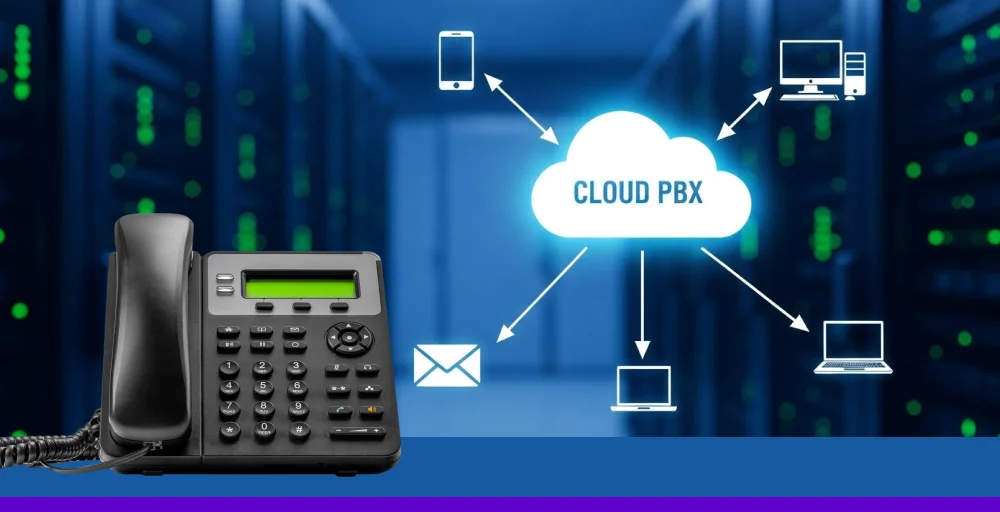
SIP, itself, is a communication protocol that lets you set up and manage calls over the internet. So, when you make a call from a SIP phone, SIP sends a request to connect your call via an internet connection.
After the recipient responds, voice data can travel between devices using media channels that both sides have agreed to use.
This is accomplished through a system known as the Real-Time Transport Protocol (RTP). SIP itself doesn’t carry voice data, but acts as a traffic controller for the call.
Features that make the SIP phone more reliable
SIP phone services go beyond basic voice calling, offering features that enhance productivity, scalability, and call quality. Whether you’re a business or individual user, SIP phones can help you communicate effortlessly.
Here are some key features SIP phones offer to support modern voice communication needs:
- High-definition (HD) voice quality: Experience HD audio quality, powered by advanced audio codecs.
- Support for mobile and desktop applications: With dedicated VoIP apps, you can connect and manage your calls from a smartphone, tablet, or computer.
- Call forwarding and simultaneous ringing: Don’t miss a call by forwarding it to another number or letting multiple devices ring simultaneously.
- Automated attendant: Greet callers with a personalized greeting and direct their calls to the appropriate agent or department.
- Power over Ethernet (PoE): PoE VoIP phones simplify setup by delivering both power and data through a single Ethernet cable.
- Call recording: Automatically record calls for quality control, training, or legal reasons.
- Wi-Fi calling capability: Make and receive calls using a Wi-Fi network, allowing you to work from anywhere.
- Custom caller ID: Display the business name or a specific department associated with outgoing calls to foster trust and brand loyalty.
- Shared call appearance: Multiple phones can ring simultaneously for the same incoming call, allowing any available team member to answer.
- Unified communications solution: Combine voice, video, email, and chat into a single unified platform for seamless communication across channels.
- Voicemail to email transcription: Forward your voicemail as text to your email inbox to make it easier to read and respond.
- Advanced security features: Encrypt your calls and utilize secure protocols to safeguard your conversations against spying, eavesdropping, or fraud.
What are the different types of SIP phones?
There are mainly two types of SIP phones: hard phones and softphones. Although both utilize SIP technology and are compatible with cloud-based phone systems, their use cases vary depending on how and where you want to communicate.
1. Hard phones
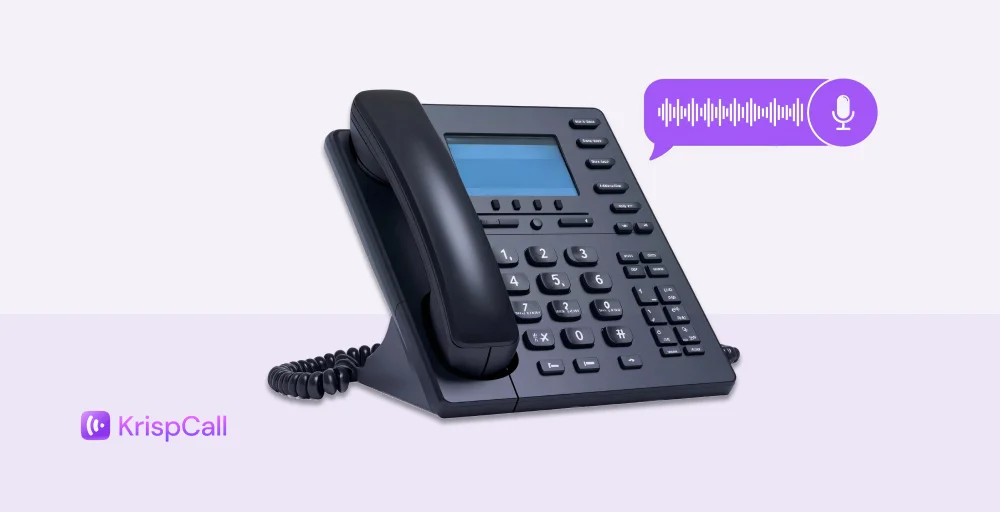
Hard phones resemble traditional landline telephones. However, at their core, they connect to an IP network via Ethernet cables or WiFi rather than standard phone lines. Some models are cordless and use DECT (Digital Enhanced Cordless Telecommunications) technology to connect wirelessly to a SIP-enabled base unit.
The base unit then connects to the IP-PBX system, using SIP as the signaling and RTP as the media for voice. This setup offers a flexible and high-quality communication system that seamlessly integrates with VoIP service providers and PBX systems.
Some of the popular hard phones include Cisco, Poly, and Panasonic. Additionally, it’s essential to understand that not all hard phones are the same. They come in different types, including:
- Basic: These SIP phones have a dial pad and are most commonly used by contact center or call center agents. They can communicate with internal teams and also make external phone calls.
- Intermediate: Beyond basic functionality, intermediate hard phones offer more features, including additional buttons, directories, and call-parking capabilities. These are ideal for office workers and remote employees requiring flexibility.
- Advanced: The advanced SIP hard phones are perfect for managers, offering touchscreen controls, full-color displays, and Bluetooth and Wi-Fi support. Additionally, you can also enjoy video calling, app integration, and other advanced features with some SIP hard phones.
2. Softphone
Hardphones are less portable and require physical hardware to function, making them a better fit for fixed office setups. To offer more flexibility, softphones serve as a software-based alternative that can be installed on devices such as smartphones, tablets, and computers.
SIP softphones mimic a traditional phone interface and connect to your VoIP service, allowing you to make and receive calls over the internet using your device’s microphone and headset.
As part of a cloud-based phone system, softphones let you stay connected from anywhere with an internet connection.
Some of the popular softphone services include Linphone, Bria, MicroSIP, and KrispCall.
Why are SIP phones a smart choice for modern businesses?
If you still doubt whether to use SIP phones, here are some ways a SIP phone system can transform your business communication:
- Cost savings: SIP phones connect through the internet instead of conventional landlines, reducing long-distance and monthly costs.
- Greater flexibility and mobility: Users can make and receive calls from anyplace using either hard phones or softphone applications installed on their devices.
- Smooth integration with a variety of business tools: SIP phones can be seamlessly integrated with numerous systems, including CRM systems, to enhance productivity and improve customer service efficiencies.
- Advanced features for enhanced productivity: Call forwarding, voicemail to email, and video conferencing help you provide consistent streams of communication.
- Scalable for growing businesses: Adding or removing users is easier, allowing companies to expand rapidly without incurring significant investment.
Difference between VoIP and SIP
Although VoIP (Voice over Internet Protocol) and SIP (Session Initiation Protocol) are often used interchangeably, they serve different purposes in internet-based communication.
VoIP is a broader technology that enables you to make calls over the internet by converting your voice into digital signals and transmitting them through a broadband connection.
It powers many advanced features like call recording, voicemail-to-email, and video conferencing, serving as the foundation for modern, internet-driven communication.
In contrast, SIP is a specific signalling protocol that exists within the VoIP system. It is used for initiating, maintaining, and terminating communication sessions with other devices through a VoIP network.
SIP does not transmit the voice; instead, it is the protocol that handles the voice data sessions that are established and managed between devices.
Conclusion
SIP phones are cost-effective solutions for modern business communication, offering lower call rates, advanced features, and seamless integration with business tools. They give teams the flexibility to stay connected from anywhere, which makes them a go-to choice as remote and hybrid work models grow.
With the global trend of companies transitioning to remote work, SIP phone systems have been the most prominent choice. They not only offer mobility but are scalable as your business expands.