

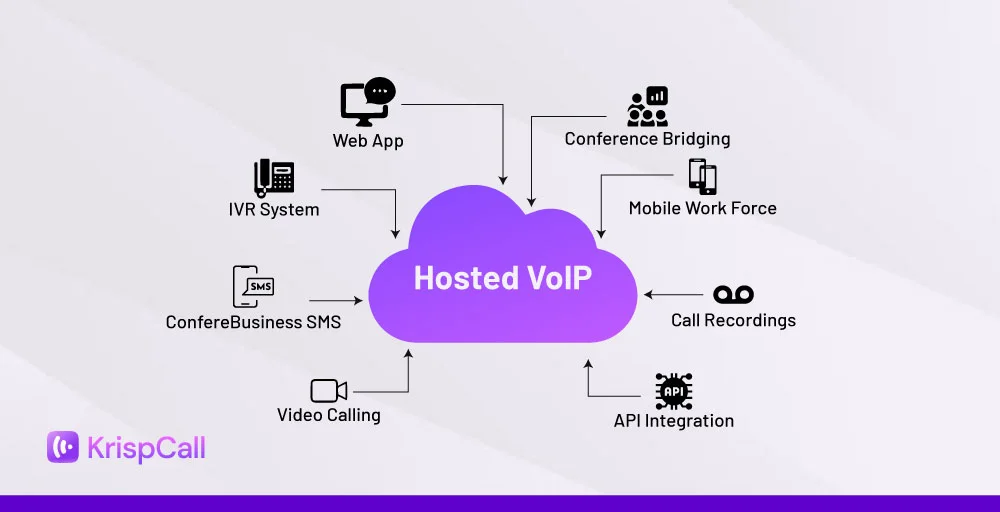
Hosted VoIP is a cloud-based business phone system that lets companies make and receive calls over the internet instead of traditional landlines. Because the system is hosted and managed by a provider, businesses do not need to maintain on-site PBX hardware, which makes hosted VoIP easier to scale, simpler to manage, and more cost-effective.
For growing businesses, hosted VoIP offers more than just internet calling. It can include features like call forwarding, IVR, voicemail, analytics, number sharing, and integrations with business tools. This makes it a practical option for startups, remote teams, customer support teams, and companies that want a flexible phone system.
In this guide, you’ll learn what is hosted VoIP, how it works, its main benefits, pricing factors, and how to choose the best hosted VoIP solutions for your business.
✨ Key Takeaways
- Hosted VoIP is a cloud-based telephony solution that transmits voice calls over the internet, with all hardware and software managed by the VoIP service provider.
- The hosted VoIP works by turning your voice into digital signals and then transmitting them over the internet using a hosted VoIP provider.
- Hosted VoIP features are call routing, auto-attendant, IVR, advanced call management, Softphone app, CRM integration, conference calls, and voicemail features.
- These hosted VoIPs are cost-effective, provide detail call analytics and reporting, improve security, and enhance customer service.
What is a hosted VoIP?
Hosted VoIP (Voice over Internet Protocol) is a cloud-based phone system that allows businesses to make and receive calls over the internet instead of traditional landlines. It is also commonly referred to as a hosted PBX or cloud phone system.
In a hosted VoIP setup, all call management infrastructure is handled by a service provider and stored in the cloud. This means businesses do not need to install or maintain physical PBX hardware on-site. Instead, users can access the system through VoIP phones, desktop apps, or mobile devices.
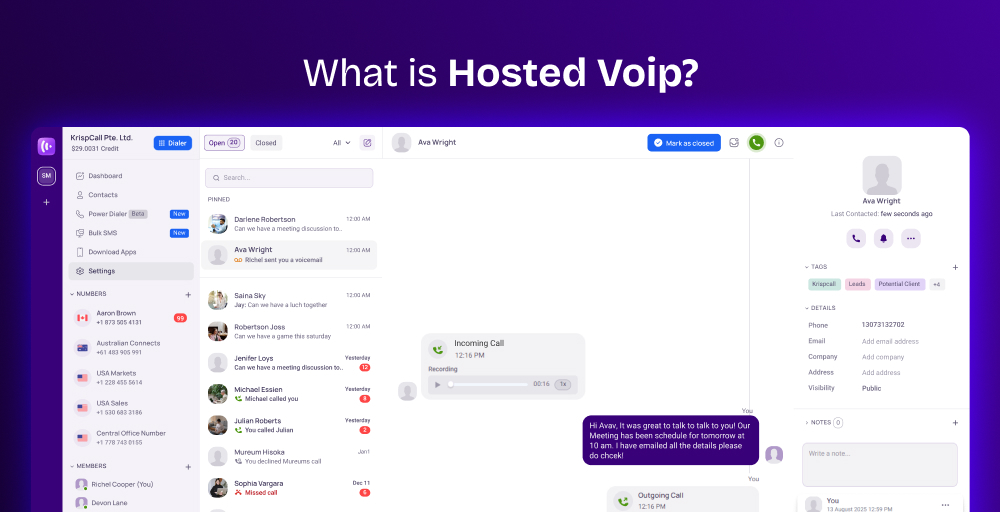
Hosted VoIP systems use internet protocols like SIP (Session Initiation Protocol) to transmit voice data securely and efficiently. This allows businesses to manage calls, route communication, and scale operations without complex infrastructure.
Because of its flexibility, hosted VoIP is widely used by small businesses, startups, remote teams, and enterprises looking for a scalable and cost-effective communication solution.
How does hosted VoIP work?
Hosted VoIP works by converting voice signals into digital data and transmitting them over the internet instead of traditional phone lines. The entire system is managed by a cloud-based provider, which handles call routing, storage, and system maintenance.
Here’s how a hosted VoIP system works step by step:
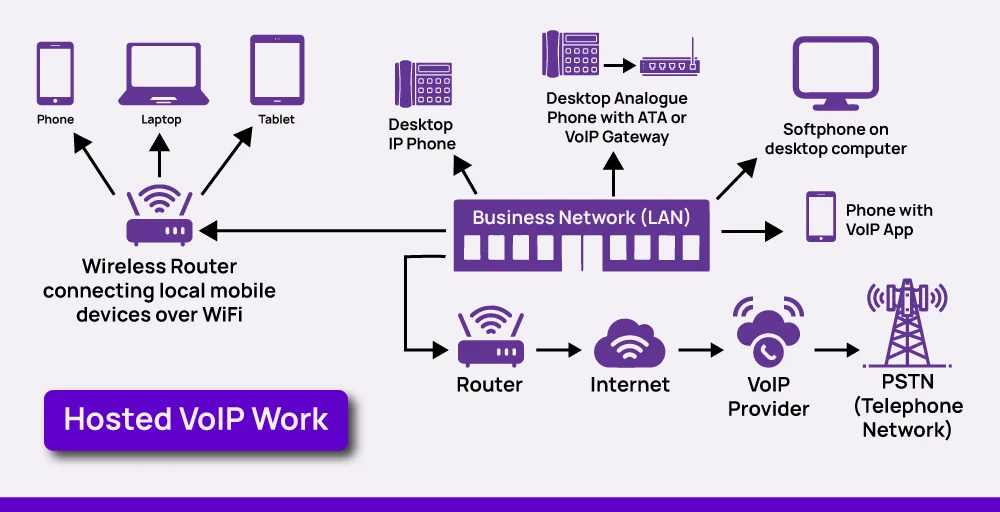
1. Voice is converted into digital signals: When you make a call, your voice is converted into digital data using VoIP technology.
2. Data is transmitted over the internet: The digital voice data is sent through your internet connection instead of copper telephone lines.
3. Calls are routed via cloud servers: The hosted VoIP provider uses cloud infrastructure to route the call to the correct recipient using protocols like SIP (Session Initiation Protocol).
4. The recipient receives the call: The call is delivered to the recipient’s device, which can be a VoIP desk phone, computer, or mobile app.
5. Advanced features are applied in real time: Features like call forwarding, IVR, voicemail, and analytics are handled through the cloud without requiring physical hardware.
Because everything is managed in the cloud, businesses can easily scale their communication system, add users, and access advanced calling features without complex setup or maintenance.
Hosted VoIP features you must know
Hosted VoIP or hosted over ip enhances communication beyond just making phone calls, incorporating advanced features like video conferencing and turning it into an extensive, feature-rich platform supporting unified business communications.
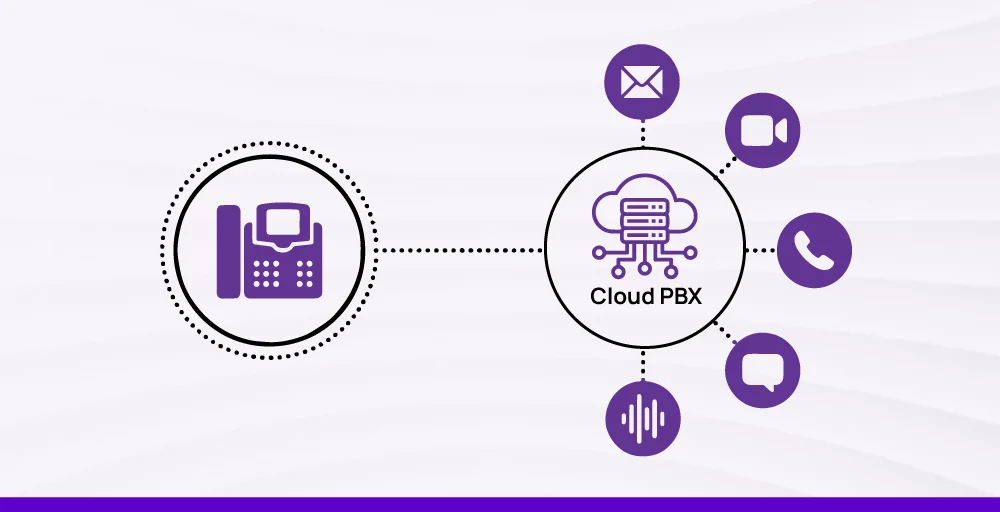
Here’s an overview of the hosted VoIP features:
- Call routing: You can set up rules to route calls based on various factors, such as time of day, caller ID, or the department customers are trying to reach.
- Auto attendant: A virtual operator greets incoming calls, directs them to the right extension, or efficiently records messages.
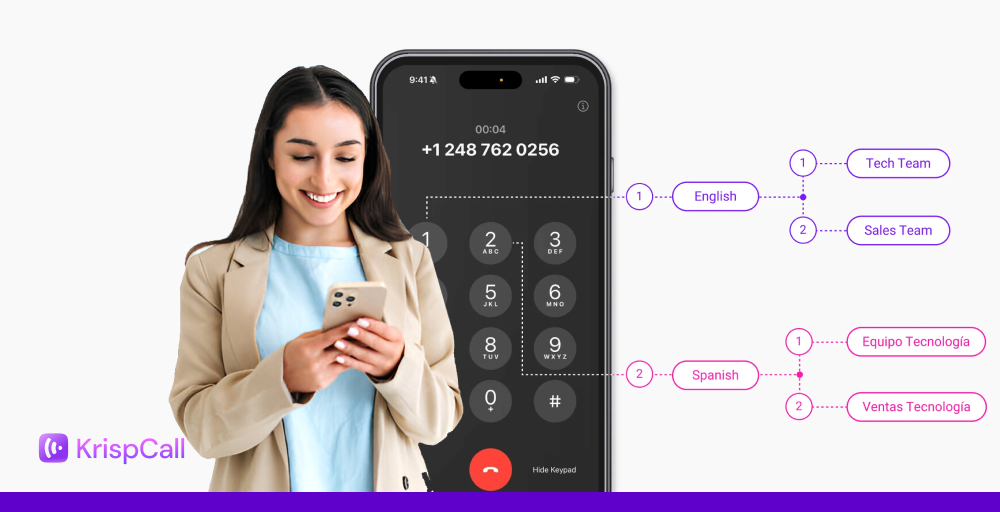
- Interactive Voice Response (IVR): Let callers use their voice or keypad to navigate an automated menu. This helps efficiently route calls to the correct department, easing the burden on staff.
- Advanced call management: Utilize advanced features like smart call routing, automated receptionists, call recording, and real-time data analysis to improve how calls are handled and enhance customer satisfaction.
- Softphone app: Make and receive calls, check voicemail, and manage settings directly from your smartphone using an intuitive softphone application.
- CRM integration: Integrate your cloud-based phone system (VoIP PBX) with your Customer Relationship Management (CRM) software to streamline operations. This allows you to record calls, easily access caller information, and ultimately improve customer service.
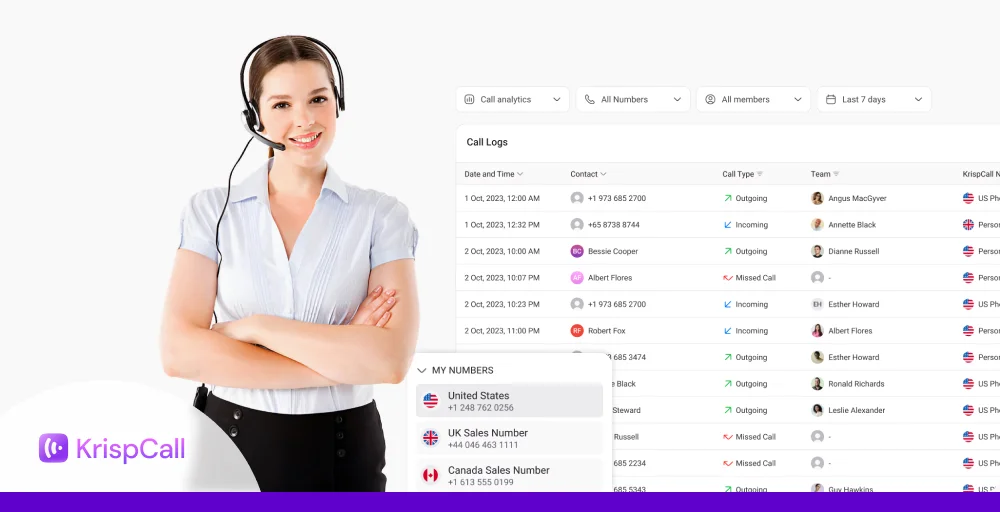
- Advanced call analytics: Acquire valuable insights into your communication channels. Monitor call statistics, such as volume, length, and patterns, to optimize resources and identify opportunities for improvement.
- Conference calls: Encourage teamwork with effortless conference calling features. Host calls with multiple participants smoothly, enhancing communication and project efficiency.
- Toll-free and local phone numbers: Foster a professional image and enhance accessibility by utilizing toll-free numbers for your company. Build a local presence with phone numbers in your target regions, which helps increase trust and brand recognition.
- Voicemail features: Keep track of your messages as voicemails are sent directly to your email inbox as attachments.
Benefits of a hosted VoIP solution for small businesses
Hosted VoIP phone systems for small business deliver measurable results. Studies show that small businesses save up to 50–68% on phone costs after switching to hosted VoIP, and about one-third of businesses have already adopted VoIP systems.
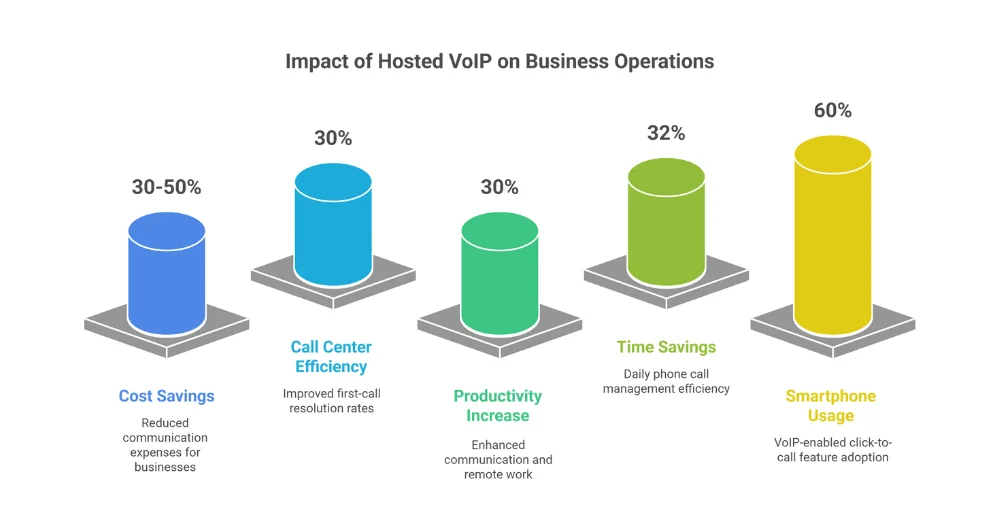
One of the biggest advantages is predictable monthly pricing with a clear hosted VoIP cost per user structure, which makes budgeting simple for any business.
Some of the hosted telephony benefits are:
- Cost savings: Switching to a hosted VoIP system reduces the costly PBX hardware. VoIP eliminates the need for expensive hardware, and many VoIP providers offer affordable monthly pricing plans.
- Scalability for growing businesses: Whether you’re a small startup or a large enterprise, hosted VoIP offers easy scalability to match your business growth. You can add new users and features with just a few clicks, without the need for new hardware or additional infrastructure.
- Detailed call analytics and reporting: You gain access to analytics like call volume, duration, wait times, and missed calls, providing insights into customer service and helping to optimize staffing and workflows.
- Reliability and flexibility: Hosted VoIP works seamlessly for remote teams, allowing employees to make and receive calls from anywhere in the world, using any internet-connected device. This is especially useful for businesses with a distributed workforce.
- Improved security: Hosted telephony providers ensure your privacy by implementing strong data protection measures and encryption protocols. With end-to-end encryption and secure data storage, you can trust that your calls and customer information are fully protected.
- Advanced features: Hosted VoIP systems offer advanced features such as call forwarding, virtual receptionists, and voicemail-to-email. These features ensure seamless communication, whether you’re in the office or on the go.
- Enhance customer service: Modern hosted VoIP solutions integrate with contact center tools, enabling 24/7 customer support without high infrastructure costs. This means that you can provide better customer support.
Hosted VoIP vs On-Premise PBX vs Cloud VoIP: What’s the Difference?
Businesses often compare hosted VoIP with traditional PBX systems and cloud VoIP solutions when choosing a phone system. While all three enable communication, they differ in cost, setup, scalability, and maintenance.
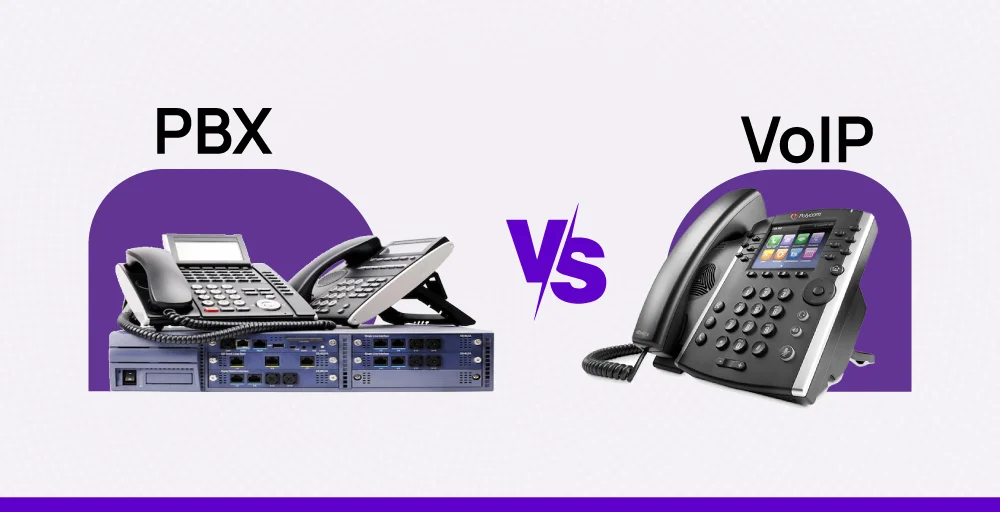
Understanding these differences helps businesses choose the right solution based on their needs, budget, and growth plans.
| Feature | Hosted VoIP | On-Premise PBX | Cloud VoIP |
| Infrastructure | Cloud-based | Physical hardware | Cloud-based |
| Setup | Quick and simple | Complex installation | Quick setup |
| Upfront Cost | Low | High | Low |
| Maintenance | Provider-managed | In-house IT required | Provider-managed |
| Scalability | Highly scalable | Limited | Highly scalable |
| Accessibility | Remote-friendly | Office-based | Remote-friendly |
| Features | Advanced | Limited | Advanced |
Hosted VoIP vs On-Premise PBX
Hosted VoIP eliminates the need for physical PBX hardware, while on-premise PBX systems require businesses to install and maintain equipment on-site. This makes hosted VoIP more cost-effective, easier to manage, and more scalable compared to traditional PBX systems.
Hosted VoIP vs Cloud VoIP
Hosted VoIP is often considered a type of cloud VoIP. However, hosted VoIP typically focuses on managed business phone systems (hosted PBX), while cloud VoIP can include a broader range of communication services. In most business use cases, the terms are used interchangeably.
Hosted VoIP is a cloud-managed phone system, while on-premise PBX relies on physical hardware, making hosted VoIP more flexible, scalable, and cost-efficient.
Hosted VoIP Pricing: What Does It Cost?
Hosted VoIP pricing typically ranges from $15 to $50 per user per month, depending on the provider, features, and business requirements. Most hosted VoIP services operate on a subscription-based model, making it easier for businesses to scale without large upfront costs.
Several factors can influence the total cost of a hosted VoIP system:
- Number of users: More users increase the monthly cost
- Features and functionality: Advanced features like IVR, call recording, analytics, and integrations may increase pricing
- International calling: Global calling plans or usage-based charges can affect costs
- Hardware requirements: IP phones or headsets may require an additional one-time
- Investment Integrations: CRM and third-party integrations can add to the pricing depending on the provider
For small businesses, hosted VoIP remains one of the most cost-effective communication solutions, as it eliminates the need for expensive on-site infrastructure and ongoing maintenance.
| Plan type | Estimated cost | Best For |
| Basic Plan | $12–$25/user/month | Small teams and startups |
| Standard Plan | $25–$35/user/month | Growing businesses |
| Advanced Plan | $35–$50+/user/month | Enterprises and call centers |
Hosted VoIP costs between $12 and $50 per user per month, offering a scalable and cost-effective alternative to traditional phone systems.
UCaaS explained: The next step after hosted VoIP
UCaaS (Unified Communications as a Service) is the natural evolution of Hosted VoIP, taking communication far beyond simple voice calls. While Hosted VoIP focuses on internet-based calling and PBX-style features like extensions and voicemail, UCaaS integrates multiple communication tools into one unified platform.
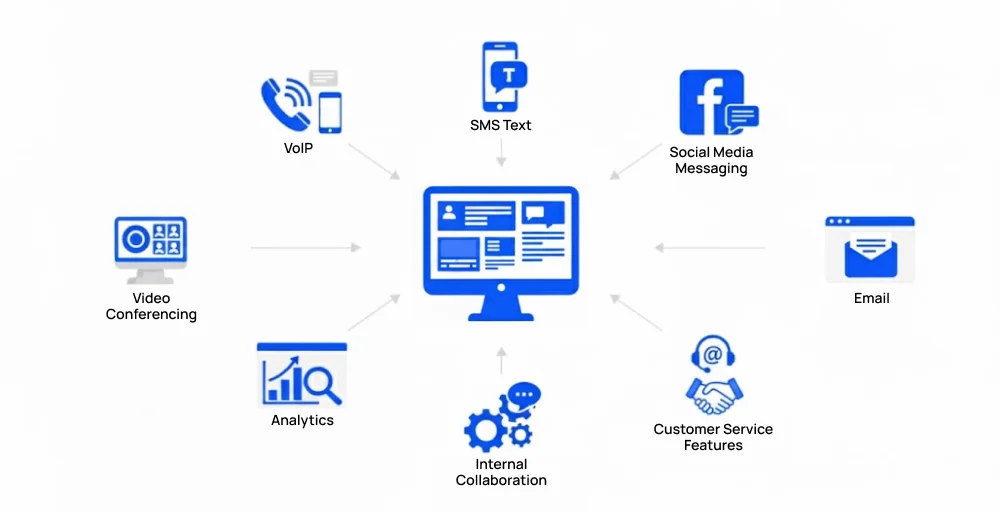
Key UCaaS Features Beyond Hosted VoIP:
- Video Conferencing: Connect face-to-face with clients and teammates through HD virtual meetings, anytime, anywhere.
- Business SMS: Send secure, professional text messages directly from your business number for faster communication.
- File Sharing: Easily share and collaborate on documents, presentations, and other files within the same platform.
- Instant Messaging: Keep team discussions flowing with real-time chat channels for quick coordination.
- Integration with Apps: Sync with CRM systems, help desks, and productivity tools for unified workflows.
UCaaS builds on the foundation of Hosted VoIP by combining every essential communication tool into one solution.
Use cases of hosted VoIP service: Who should use it?
1. Small and medium-sized businesses (SMBs)
Hosted VoIP fits really well for SMBs because it cuts down the heavy phone system cost and replaces it with simple cloud based calling. Most small teams start with 5 to 30 users and get everything running without any wiring or on site hardware.
SMBs also see around a 30 percent boost in productivity because of features like mobile call handling, smarter routing, and the freedom to receive calls from any device. It lets teams move faster since nobody is tied to a fixed desk phone anymore.
Some industry reports even show productivity improvements as high as 77 percent when companies use advanced hosted VoIP tools like call recording, shared team inboxes, analytics, and fewer call disruptions. This is a big reason many growing businesses like clinics, real estate agencies, travel offices, and online service companies switch to hosted VoIP.
2. Remote and hybrid teams
About 70 percent of hosted VoIP users work on laptops or mobile apps. The system lets them take calls from anywhere while keeping the same business number. Managers can see call logs, recordings, and team activity even if everyone is in different cities.
A lot of distributed teams do daily standups on softphones and use features like warm transfer or team messaging to stay aligned.
This kind of flexibility makes a small business hosted VoIP phone system invaluable, especially for teams that need to stay connected without being tied to a physical office.
3. Customer support and call centers
Call centers that handle 500 to 2000 calls daily use hosted VoIP for IVR menus, real time call queue stats, and call monitoring. These features often reduce wait time by 20 to 35 percent and improve first contact resolution.
Supervisors use call barging, recording, and analytics to train new agents, especially in fast moving industries like eCommerce, insurance, and tech support.
Hosted VoIP security and reliability
In its early stages, hosted VoIP lacked the security of traditional telephony; however, advancements in technology have made it equally secure, if not more secure, than the Public Switched Telephone Network (PSTN).
Here’s what good hosted VoIP providers do to keep your data safe and prevent costly security issues:
- Encryption: Hosted VoIP services typically use encryption protocols like TLS (Transport Layer Security) and SRTP (Secure Real-time Transport Protocol) to secure voice data from interception during transmission over the internet.
- Firewalls and Intrusion Detection: Hosted VoIP platforms often include firewall protection and intrusion detection/prevention systems to monitor and block malicious traffic.
- Regular Security Updates: Cloud providers continuously update their platforms with security patches and improvements to protect against emerging threats.
- Compliance: Many hosted VoIP solutions comply with industry standards and regulations such as HIPAA (for healthcare), GDPR (data privacy), and PCI-DSS (payment security), ensuring that sensitive communications meet legal requirements.
Top 8 hosted voice over IP solutions for small businesses
To choose the right provider for your business needs, here’s a quick comparison of the top 8 hosted voice over IP solutions for small businesses, highlighting their best use cases and key features.
| Provider | Best For | Key Features |
| RingCentral | Unified communications from small to enterprise scale | Voice, video, messaging, analytics, app integrations |
| Nextiva | SMBs needing robust phone systems | Intelligent call routing, advanced voice analytics |
| Dialpad | AI-infused communication tools | Real-time transcription, AI-powered sales intelligence |
| KrispCall | Small businesses, startups, freelancers | Global phone numbers, call forwarding, voicemail, call analytics, CRM integrations |
| Vonage | Customization and flexible voicemail | AI Virtual Assistant, custom call tagging |
| 8×8 | Global teams requiring compliance | Unlimited calling, team chat, video meetings |
| GoTo Connect | Scalable phone systems with attendants | In-call routing, auto-attendants, screen sharing |
| OpenPhone | Smart call recording and virtual number management | Sleek VoIP number system, call recording |
Whether you’re a startup or an established business, this list will help you compare hosted VoIP providers and find the one that best fits your communication needs.
How to choose a best hosted VoIP service providers?
Choosing the best hosted phone system providers is crucial for smooth business communication. To pick the best one, think about what features you need, the costs, their coverage, and how easy it is to use.
Here are some of the things that you need to keep in mind while choosing a hosted VoIP provider:
- Identify your needed features and channels
- Compare providers based on features and pricing
- Check calling areas, phone number options, and sms limits
- Take advantage of free trials or demos
- Choose the plan that offers the best value
Why choose KrispCall as a hosted VoIP solution for your business?
KrispCall offers a reliable hosted VoIP solution that lets businesses manage calls, messages, and contacts from one easy-to-use platform, no hardware or technical setup required. It delivers high-quality voice calls, smart features like call routing, recording, and analytics, and seamless scalability as your team grows. With global coverage, strong security, and 24/7 support, KrispCall ensures smooth, affordable, and professional communication for businesses of any size.