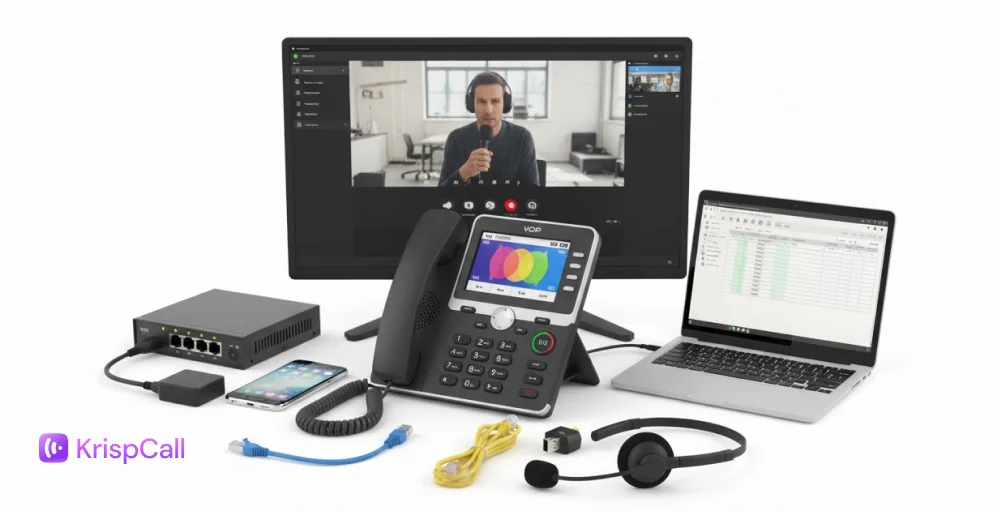



Clear communication matters. VoIP lets you make phone calls over the internet instead of using traditional phone lines. It’s flexible and costs less than regular phone systems.
By converting your voice into digital signals and sending them over the internet, a VoIP phone system enables calls to be made from virtually anywhere with an internet connection.
But the big question remains: Is VoIP truly reliable for modern communication? While some might recall past issues like poor call quality, today’s VoIP technology has advanced significantly.
This blog covers what you need to know about VoIP reliability when switching to a cloud phone system.
✨ Key Takeaways
- VoIP (Voice over Internet Protocol) enables phone calls over the internet, offering flexibility, mobility, and lower costs compared to traditional landline systems.
- The reliability of VoIP depends on several factors, such as internet stability, provider infrastructure, device setup, and network QoS, each playing a role in call clarity and consistency.
- KrispCall guarantees dependable VoIP communication with redundant cloud infrastructure, real-time monitoring, intelligent call routing, and 24/7 support for uninterrupted business operations.
Is VoIP reliable for modern communication?
Yes, VoIP is a reliable option for modern communication if it is set up correctly and maintained properly. The reliability of VoIP systems has improved in the past few years due to the following key factors:
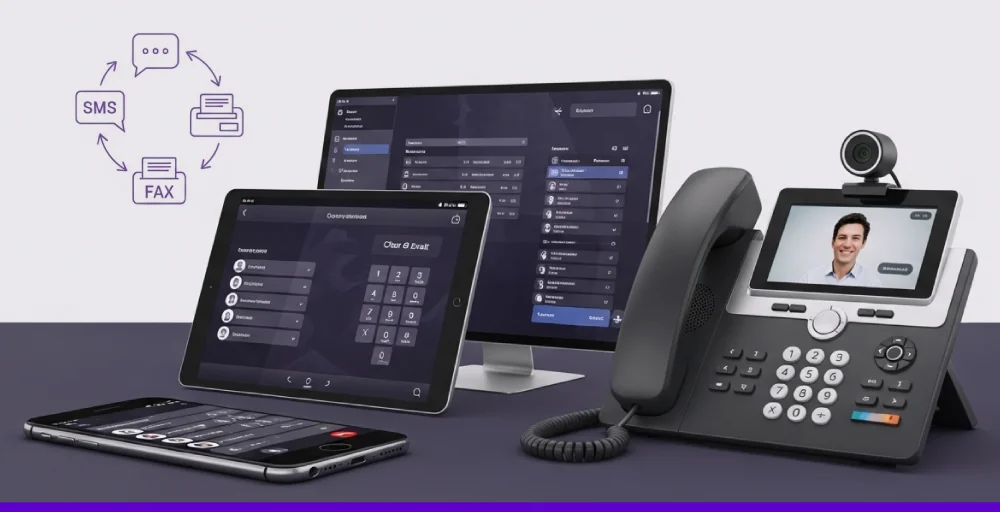
1. Advancements in VoIP technology
High-speed broadband internet has transformed communication, making Voice over Internet Protocol (VoIP) technology a highly dependable solution. Modern internet connection, whether cable, fiber, or 5G Wi-Fi, offers significantly more consistent bandwidth and lower latency.
This advancement ensures that the VoIP calls are high-definition and free from common issues like dropped calls, packet loss, or network jitter.
2. Cloud-based VoIP & global server redundancy
Instead of depending on localized, on-site, or on-premises systems, VoIP service providers utilize extensive, cloud-based infrastructures. Cloud phone systems use geographically dispersed data centers, which are interconnected by high-performance Tier 1 fiber optic cable networks.
This strategic redundancy means that if one data center experiences an interruption, calls are seamlessly and automatically rerouted to other operational locations. This ensures an industry-leading 99.999% uptime guarantee for continuous communication.
3. VoIP vs. landlines
In the past few decades, landline phones were known as the reliable “gold standard,” but now VoIP has changed the whole concept of reliability.
VoIP phone systems are considered more trustworthy than traditional lines in cases of service interruptions or localized outages. The VoIP calls can be easily rerouted over the internet, allowing you to receive calls on any device.
In fact, VoIP’s reliability has now matched and in some cases, even exceeded traditional landline phones due to its advantages, which are:
- Call quality: VoIP offers clear calls using HD voice and audio, along with noise reduction, providing superior call quality compared to traditional landlines. Issues like call dropouts, static, and screeching are minimal.
- Uptime & redundancy: Top VoIP phones have a backup data center and can reroute calls if there’s a problem. Landlines depend on physical lines, which are harder to fix during outages.
- International calls: VoIP is much cheaper for making international calls as it uses the Internet. Landline often charges high per-minute rates.
- Flexibility: VoIP works anywhere with internet, making it great for remote or mobile work. Landlines are stuck in one location.
- Costs: VoIP costs less than landlines. You don’t need expensive equipment or maintenance. Most VoIP plans charge a flat rate per user. Landlines cost more because of equipment, service fees, and per-minute charges.
- Security: VoIP uses strong encryption and meets standards like HIPAA and PCI-DSS. Landlines can be easier to tap or hack.
- Disaster recovery: VoIP enables you to forward calls to employees’ devices in emergency situations. With landlines, if the line goes down, there’s no backup.
Factors affecting VoIP reliability
VoIP systems have transformed communication, but they also present some challenges. To ensure optimal performance, it’s important to identify and address these problems.
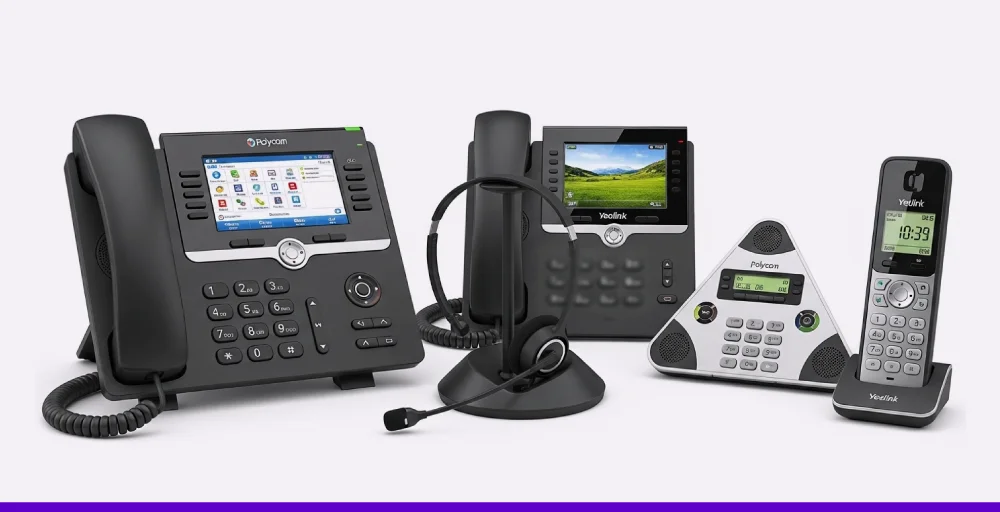
Let’s explore the critical factors affecting VoIP reliability, the problems they pose, and the VoIP troubleshooting strategies to overcome them.
1. Internet connection quality
Your internet connection is the foundation for VoIP calls. Four things that affect call quality are bandwidth, latency, network jitter, and packet loss.
Not enough bandwidth causes dropped calls or poor sound. High latency and network jitter create delays and distorted speech. Packet loss breaks up audio data, making conversations unsteady.
2. VoIP provider infrastructure
Your VoIP provider’s infrastructure significantly impacts the reliability of your calls. Some of the essential factors include server uptime, data center locations, backup systems, and the efficiency of call routing.
Providers with strong service level agreements (SLAs) and modern, scalable systems offer more consistent service and faster recovery when problems arise.
3. Device and hardware setup
Your equipment affects how well VoIP works. This includes IP phones, headsets, routers, and modems.
Poor-quality microphones or speakers make audio unclear. Old or badly set-up routers may not handle VoIP calls well. You need echo cancellation, noise reduction, and updated firmware to keep audio quality good.
4. Network congestion and QoS
VoIP is sensitive to network congestion, particularly when competing for bandwidth with high-traffic activities such as video streaming or large file downloads.
Without Quality of Service (QoS) settings in place on routers, voice packets may be deprioritized, leading to poor call quality. VoIP QoS ensures voice traffic is given higher priority over less time-sensitive data.
5. Power outages
Unlike traditional landline systems that can operate during blackouts, VoIP requires power for modems, routers, and IP phones.
A power outage can completely cut off VoIP communication unless backup solutions, such as Power over Ethernet (PoE) or Uninterruptible Power Supplies (UPS) with battery backup, are implemented.
6. Security & encryption
VoIP calls are vulnerable to cyber threats, including eavesdropping, denial-of-service attacks, and spoofing. Poor data security can lead to call drops or unauthorized access.
Implementing strong encryption protocols, such as SRTP (Secure Real-time Transport Protocol) or TLS (Transport Layer Security), along with firewalls, VPNs, and network monitoring tools, helps safeguard communication. This ensures consistent service by preventing malicious disruptions.
How KrispCall ensures reliable VoIP communication?
KrispCall is a top-rated VoIP provider that ensures reliable calls by utilizing robust cloud infrastructure, intelligent systems, and proactive support. Here’s how:
- Redundant cloud infrastructure: KrispCall uses cloud-based systems with multiple backups. This means minimal downtime and uninterrupted service even when systems fail or need maintenance.
- Global call routing: With intelligent global call routing, KrispCall connects calls through the most efficient and stable network paths worldwide. This reduces latency and improves call clarity, regardless of users’ locations.
- Innovative failover systems: When network problems or infrastructure issues happen, KrispCall’s automated failover systems instantly switch call traffic to backup servers. This keeps conversations going without noticeable interruptions.
- 24/7 monitoring & support: A dedicated technical team continuously monitors all systems in real-time, detecting and resolving issues proactively. Round-the-clock support ensures users receive assistance whenever needed.
- Advanced call analytics and QoS optimization: KrispCall leverages real-time call analytics and QoS tools to monitor performance, identify potential issues, and fine-tune system behavior to maintain consistently high call quality.