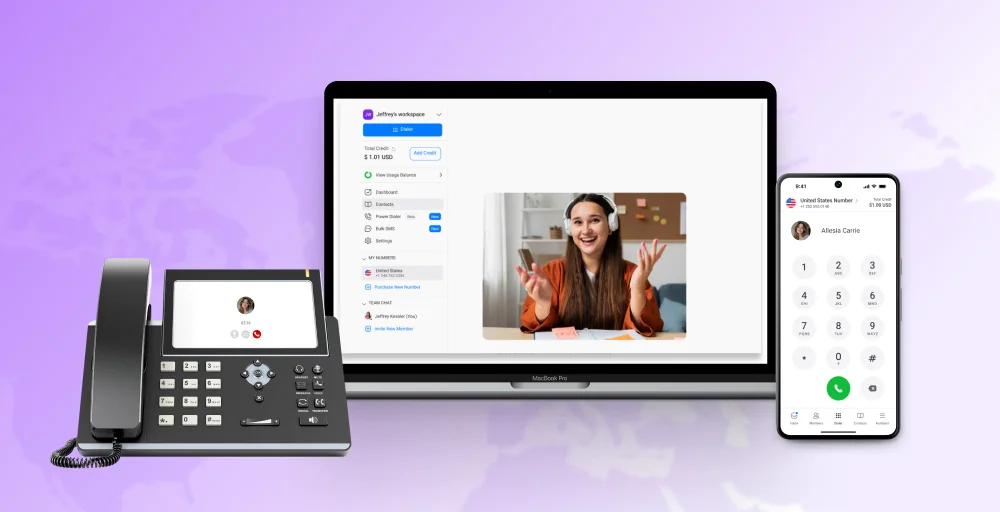


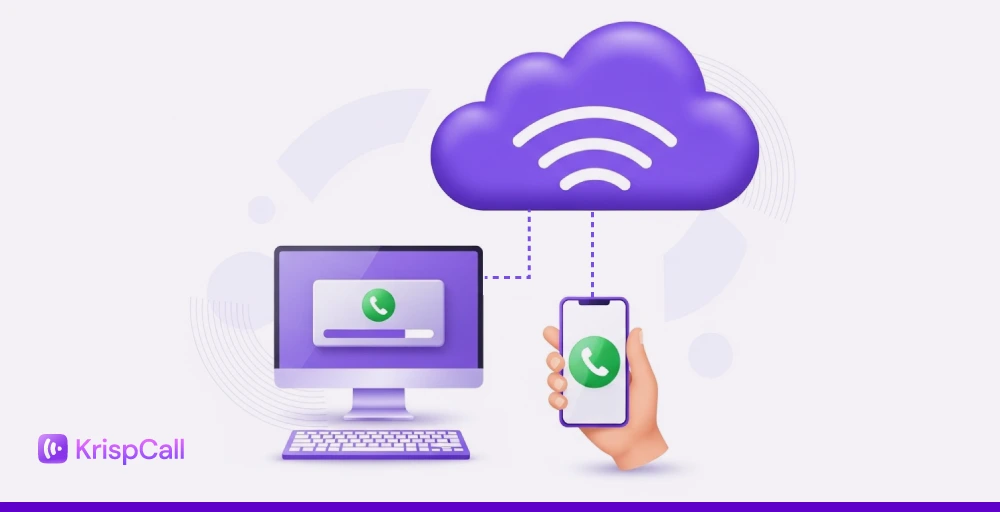
Due to the expensive and complex setup needed for the circuit-switched networks, most business owners are switching their phone systems to IP telephony. This system provides user-friendly and cost-effective solutions to organizations.
Back in 1998, this IP telephony service generated $1.08 billion in revenue. But as of now, this telephony industry is expected to reach around $65.7 billion by 2032, growing at a compound annual growth rate (CAGR) of 8.2%.
In this blog, we will be covering a comprehensive guide on IP telephony systems with their working mechanisms, benefits, and challenges. You’ll also be equipped with a real-world example of IP telephony.
✨ Key Takeaways
- IP telephony is a set of technologies that uses the Internet connection for voice communication.
- Some of the major components of the IP phone system are IP PBX, IP phone, softphone, gateways, routers and switches, SIP trunks, and servers.
- To choose a perfect IP telephony solution, consider the pricing, scalability, features, call quality, integration capabilities, and security measures.
What is IP telephony?
IP telephony (Internet Protocol telephony) is a technology that uses the Internet to send and receive voice data instead of relying on traditional landlines.
It’s built on VoIP (Voice over Internet Protocol) technology, which converts analog voice signals into digital packets and transmits over the internet. Unlike traditional telephony, which uses copper wire and physical infrastructure, IP telephony connects via router and modems.
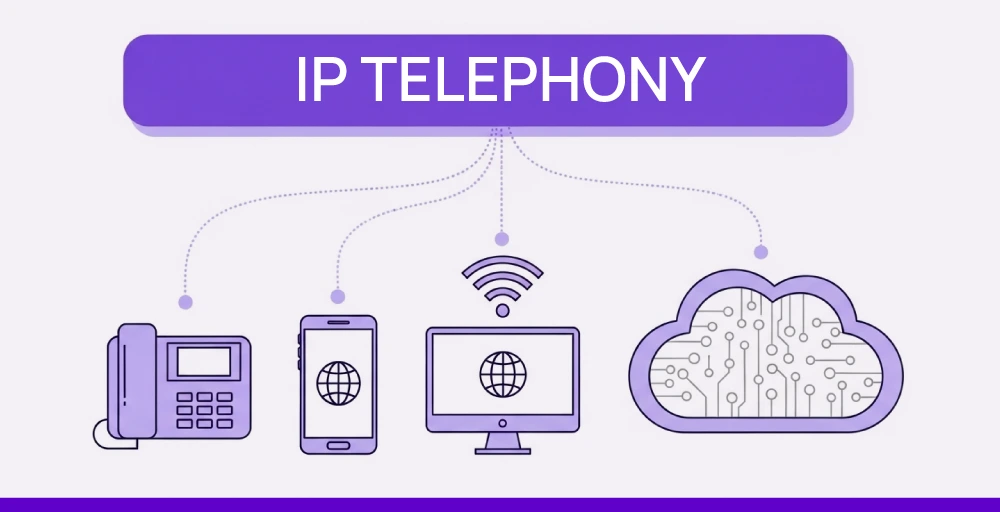
Some of the major use cases of IP telephony include text messaging, voice calling, voicemail, video calling, and faxing.
For example, an ecommerce website that uses an IP telephony system can manage customer support, sales calls, and internal communication through a single internet-based platform.
How does IP telephony work?
IP telephony converts the voice data into digital packets before transmitting them over an IP network, and they entirely rely on the internet instead of a copper wire. Here is the breakdown of how IP telephony works:
- Convert analog signals to digital: When someone speaks into an IP telephone system, their analog voice signal is captured and converted into digital data by the system. This conversion is usually done by a system called an IP phone or an Analog Telephone Adapter (ATA).
- Packetization: This is the process of breaking down the digital voice data into smaller and manageable data packets. Moreover, this packet consists of all the information about the voices, including their destination and origin.
- Protocol application: It mainly uses the two transmission protocols, i.e., SIP (Session Initiation Protocol) and RTP (Real-Time Transport Protocol). The function of SIP is to initiate, manage, and terminate voice and video calls. RTP is responsible for delivering the actual voice data packets in real time.
- Transmission over IP network: Now, the digital data packets travel across your local area network (LAN) and then over the Internet. During the transmission, they are engaged with the routers until they reach their destination.
- Reassembly and conversion: The received digital packets are reassembled in the correct order. And, finally, the ATA or IP phone converts the digital packets into analog voice, which makes the other party hear your voice.
IP telephony vs VoIP: What’s the difference?
Although the two terms, IP telephony and VoIP, are used synonymously, they refer to different scopes of technology.
IP telephony is a broader concept that includes VoIP but extends beyond just voice. It encompasses the entire range of communication services delivered over IP networks, such as voice, video conferencing, voicemail, fax, instant messaging, and more. Internet Protocol telephony is typically part of a more comprehensive unified communications system.
On the other hand, VoIP refers explicitly to the method of transmitting voice calls over IP networks by converting voice signals into digital packets. It’s a core technology that enables users to make and receive calls over the internet using devices such as smartphones, computers, or IP phones.
However, in today’s world, VoIP is not just limited to voice calls. Besides normal phone calls, this system has capabilities to execute major call handling features and is able to integrate with other business tools like CRM or ERP, and even most of the telecommunications companies have started to use these terms interchangeably.
Components of an IP phone system
The functional IP phone system is connected to the various devices and the medium to provide seamless and comprehensive capabilities.
Here is the list of components required for a complete IP phone system:
- IP PBX (Private Branch Exchange): The IP PBX serves as the central hub of an IP phone system. It is responsible for managing all the internal and external calls. Additionally, it helps to connect IP phones to the PSTN (Public Switched Telephone Network) through gateways or SIP trunks.
- IP Phones: It is also commonly known as hard phones, which are physical phones that look similar to the traditional desk phones. This phone consists of the specific hardware to convert voice data into digital packets and is directly connected to your network through an Ethernet cable.
- Softphone: Unlike a hard phone, which is a physical phone, a softphone is a software application that can be installed on computers, tablets, or smartphones. This app lets you make and receive calls using a microphone and headset.
- Gateways: VoIP gateways connect IP telephony systems and traditional telephone networks (PSTN). They convert digital VoIP signals into analog signals (and vice versa). It enables communication between IP-based systems and standard landlines.
- Routers and Switches: These two hardware components are responsible for directing and managing all the data traffic across the IP network while ensuring all the voice packets are safely transmitted to the specific destination.
- SIP Trunks: These trunks are primarily used for the external call routing in the system.
- Servers: Lastly, the servers are used to host the software and other necessary applications that are needed to operate the Internet Protocol telephony system.
Related 👉: What is a VoIP Caller? Simple Guide to VoIP Calls
Benefits of IP telephony in business
Embracing this system offers numerous advantages, including reducing the cost, providing mobility, easily integrating with other tools, and offering many more benefits.
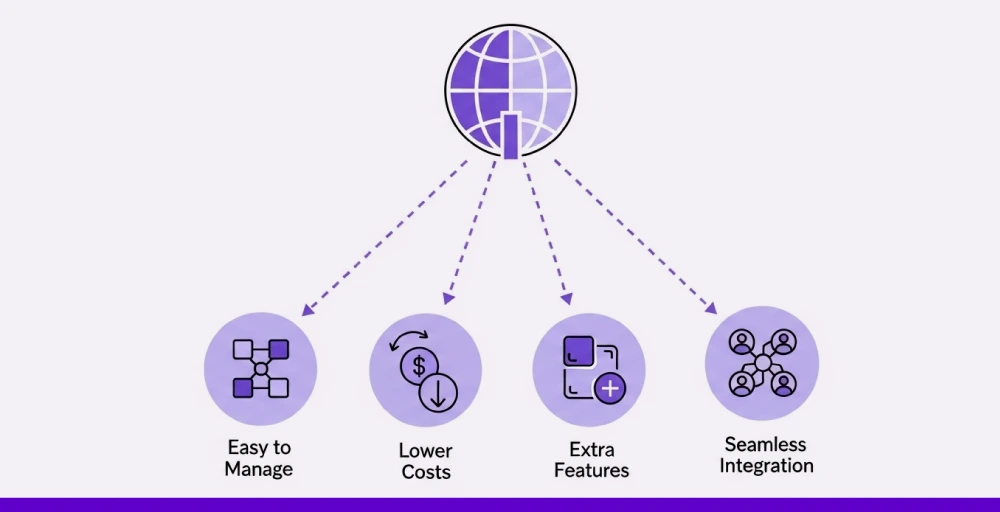
- Cost saving: Adopting the IP telephony system not only saves your calling costs but also reduces the expensive upfront setup cost. Compared to a traditional phone line, IP telephony is easier to maintain and more cost-effective in the long run.
- Accessibility: Another benefit businesses can get is easy access to this system, irrespective of their location. This telephony system allows the user to make and receive phone calls from any location, just using the internet.
- Unified communication channels: Businesses can integrate and enjoy the various functions of the system using a single dashboard. The features include video conferencing, email, fax, instant messaging, and many more.
- Advanced features: In addition to basic call functions, IP telephony offers multiple advanced functionalities such as call queuing, call forwarding, voicemail-to-email, Automatic Call Distribution (ACD), and other call handling features.
- Integration with business tools: IP telephony can be easily integrated with essential business applications like Customer Relationship Management (CRM) software, helpdesk platforms, and Enterprise Resource Planning (ERP) systems.
Challenges of IP telephony
Despite providing numerous advantages, individuals should be aware of the challenges they might face by adopting an IP telephony system. Here are some possible challenges you should know to ensure the smooth operation:
- Security: This system runs through the internet, so there will be possible security threats such as toll fraud, eavesdropping, and denial-of-service (DOS) attacks. Therefore, the user should implement various security measures, including firewalls and encryption, to ensure safe communication.
- Compatibility: It might not be compatible with every device, especially older versions of devices. Choosing a VoIP service that supports SIP trunks and integrates well with your current infrastructure is essential for a smooth transition to IP telephony.
- Quality of Service (QoS): The quality of the call is predominantly reliant on the internet bandwidth and network congestion. The network issues or the insufficient bandwidth can lead to issues like latency (delays), network jitter (choppy audio), and packet loss.
- Power outages: Unlike traditional analog phones, which can operate during power outages as they are powered through the phone wire, the IP telephone might face issues as it needs electricity.
- Requires high-speed internet connection: Users can face significant call quality issues due to slow or inconsistent internet. A stable and reliable internet connection is a must for optimal performance.
How to choose the perfect IP telephony solution for your business?
Choosing the best IP telephony solution for your business requires careful planning and evaluating factors like cost, features, reliability, and scalability.
- Cost: Before selecting the IP telephony for the business, you must analyze the total cost, including the initial setup fees, monthly subscriptions, and any other additional expenses.
- Scalability: As the business grows, you might require additional lines or services to add. So, choose the telephony system that offers more flexibility and can be expanded more easily without any hectic process at an affordable cost.
- Ease of use and setup: Choose the system that provides a user-friendly dashboard and consists of a straightforward setup. The steep learning curve will require time and some technical knowledge that might frustrate other employees or even you.
- Features: IP telephony provides advanced call handling features such as voicemail-to-email, automatic call distribution, call recording, and much more. Ensure that your system has all these features for optimal performance.
- Reliability and support: Whether it’s customer support or the software uptime, these two factors play a crucial role in maintaining the system’s efficiency. Choose an IP telephony solution with responsive technical support to ensure uninterrupted business operations.
- Integration capabilities: If your businesses require CRM or other business applications, ensure that the IP telephony solution provides seamless integration with other third-party applications.
- Security measures: As cyber threats are evolving, you should enquire about the security protocol and measures they provide. This will ensure that the data of businesses and customers is safeguarded through encryption or other security methods.
- Call quality: The primary function of IP telephony is to deal with calls, either incoming or outgoing. To ensure clear and uninterrupted communication, choose a service provider that offers high call quality backed by strong Quality of Service (QoS) measures.
Elevate your business calls with the KrispCall IP telephony system
KrispCall is a well-known VoIP service provider in the telephony market. Besides voice functionality, KrispCall also provides various call handling features such as multilevel IVR, call analytics, Unified Callbox, power dialer, and much more.
What sets KrispCall apart from other providers is its seamless integration with popular business tools like CRMs and ERPs. This will eliminate the hectic and uneasy process of switching between the apps, as you can perform your task using the same dashboard.
KrispCall also provides its customers with 24/7 customer support, regardless of location or time. Our support team is always happy to assist. Discover how KrispCall can enhance your business telephony experience.